
Two questions come up before any family booking, and they deserve straight answers.
Is it worth it
The Mara is one of the few places where a nine-year-old and a seventy-year-old can spend the same morning in the same vehicle and both come back satisfied. Lion, leopard, elephant, buffalo, cheetah, giraffe, zebra and hippo are all resident and none of them are hard to find. Black rhino live here too, though they are scarce enough that no one should promise them.

What makes it work for families is not the wildlife. It is how the day is arranged.
A morning drive that ends in camp by mid-morning is the difference between a child who wants to go out again tomorrow and one who does not. That means being close to the game to begin with — a camp inside the reserve is out among animals within minutes, while a camp beyond the gates spends the first hour driving. It also means a private vehicle, so you can turn back when the youngest has had enough rather than when the group has.
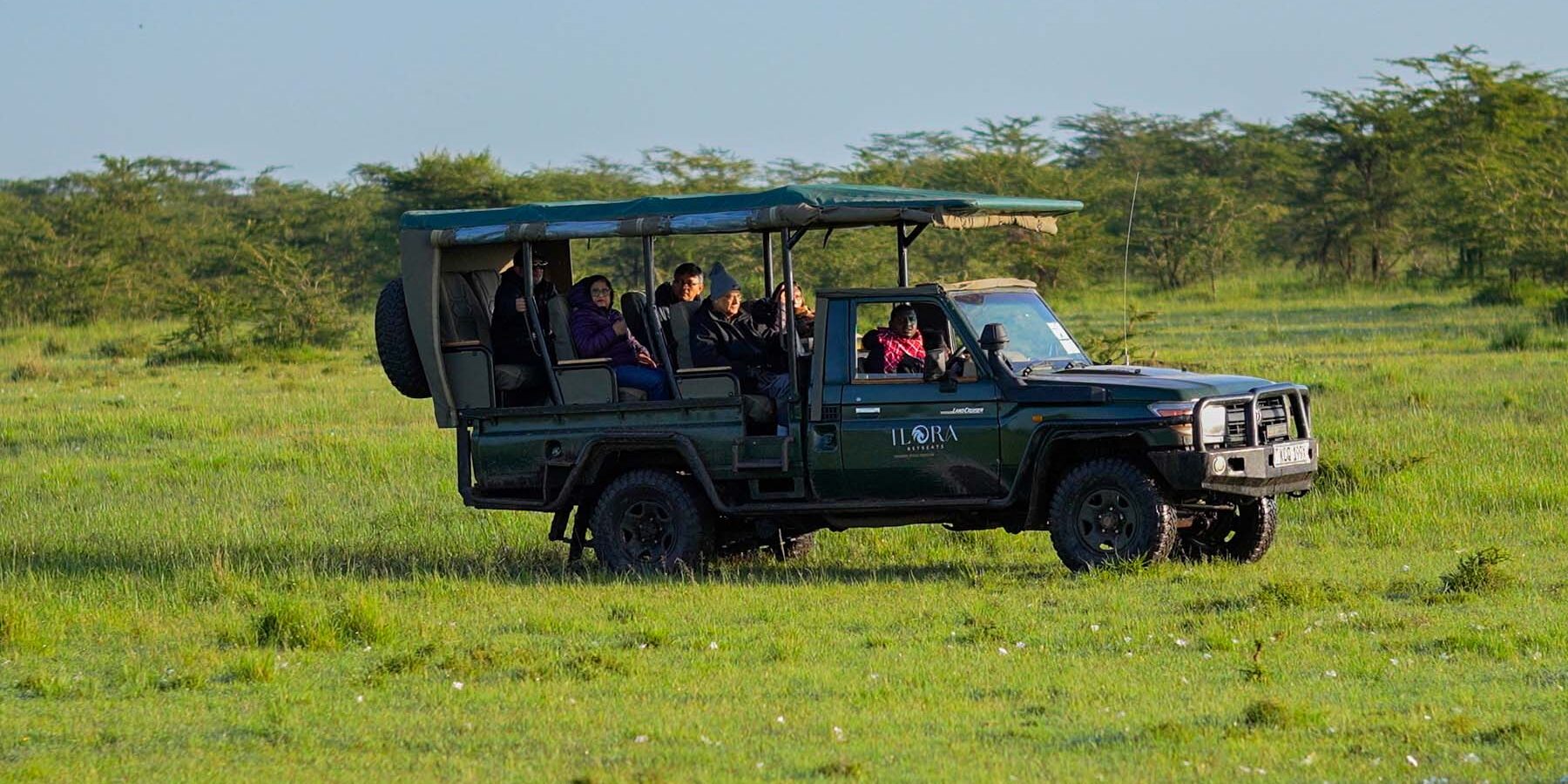
The private vehicle is the single highest-value thing a family can book, and it is worth being blunt about why. On a shared drive, your six-year-old’s need to go back is weighed against five other guests who have waited a year for this leopard. You will lose that argument, and you will spend the rest of the morning managing a child who has stopped enjoying themselves. On your own vehicle, none of that arises. You go out when your family is ready, you come back when they are done, and nobody is being polite about it.
Beyond the drives, the things children remember tend to be small and hands-on: tracking with a guide on foot, learning to make fire, throwing a blunted spear, being given a Maasai name by the people whose land this is. Evening stories around a fire. A telescope after dinner. Older children can take the balloon at dawn, or spend a morning with a camera and someone who knows how to use one.
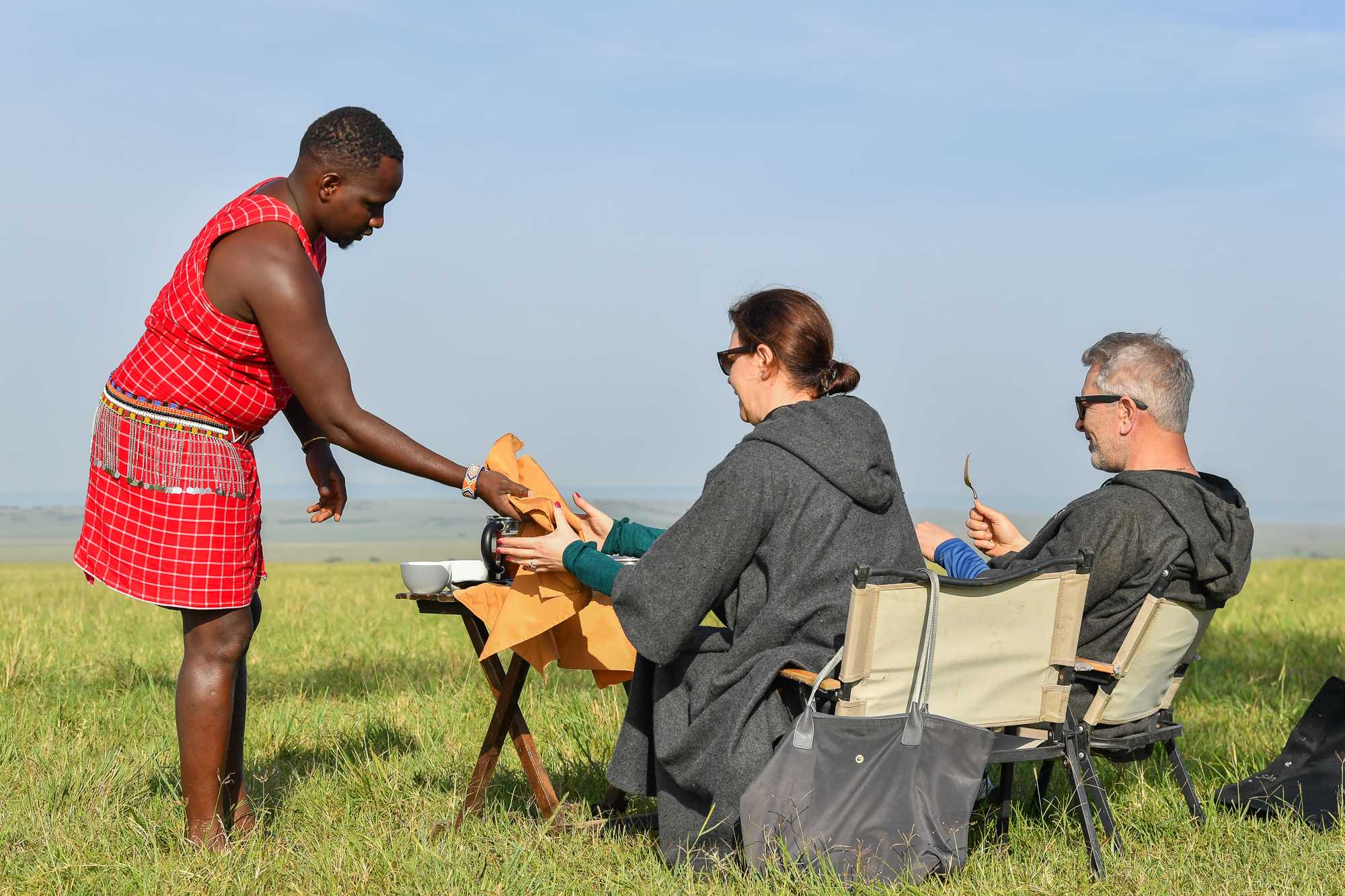
Bush breakfasts, laid out under a tree after a long drive, do more for a reluctant child than any amount of explaining.
What works at which age
The honest answer is that a safari is not equally good at every age, and it helps to know where your child sits.
Under four. Difficult, and worth thinking hard about. The drives are long for a small body, the vehicle is not a place to run around, and the wildlife registers less than the dust. Some camps set a minimum age for this reason. A family with a two-year-old can absolutely have a good week here, but it will be built around camp and short outings rather than around game drives.
Five to eight. This is where it starts working properly, and it works better than most parents expect. Children this age are unembarrassed about being interested. They ask the guide direct questions, they are genuinely thrilled by a dung beetle, and they will remember the giraffe for the rest of their lives. Keep drives to two or three hours and build in a stop.
Nine to twelve. The best age, in our experience. Old enough to sit still and use binoculars, young enough to find everything astonishing. This is the age at which a child will start tracking on their own, keep a species list, and get properly competitive about spotting things first. Give them their own binoculars and a notebook and stand back.
Teenagers. The variable one. A teenager who has been told they are going on a family holiday with no signal can be hard work for the first day. What turns it is having something that is theirs: a camera and someone to teach them to use it, the balloon flight, a walk with a Maasai guide who is closer to their age than yours. Give them a role and the mood changes.
Grandparents. Better than most people assume. The physical demands are low — you are sitting down for most of it — and the appeal is immediate. The things to check are the vehicle (can they get in and out easily), the walk from tent to dining area, and altitude if anyone has a cardiac condition. The Mara sits at around 1,500 to 1,800 metres, which is not high, but it is not sea level either.
Is it safe
Yes, with the usual caveats that apply anywhere wild.
The reserve is patrolled by Kenya Wildlife Service and county rangers. Most camps keep their own armed rangers who monitor animal movement around the perimeter and escort guests between tents after dark. Guides supervise children on every activity outside the vehicle. Camps carry first aid, and the good ones have an evacuation protocol they can describe to you before you book. Ask.
It is worth understanding what the real risks are, because they are not the ones people expect. Nobody is attacked by a lion. The genuine risks on a family safari, in rough order of likelihood, are sunburn, dehydration, a stomach upset, a fall on uneven ground in the dark, and a monkey or baboon getting into a tent that was left open. All five are managed by ordinary care.
The practical rules are short, and children follow them better than adults expect:
- Stay in the vehicle unless the guide says otherwise. Never touch or feed an animal.
- After dark, do not walk between tents alone. Ask for an escort, every time.
- Keep tents zipped. Monkeys are the usual culprit, not anything larger.
- Ask before photographing anyone in a Maasai community.
- Quiet at a sighting. Sound carries further than children think.
The escort rule is the one adults break, not children. It is a short walk, the path is familiar by the third night, and there is a strong temptation to just go. Do not. Camps inside a reserve are unfenced by design — that is the entire point of them — and buffalo and hippo move through at night.
Before you travel: check vaccinations and malaria prophylaxis with a travel clinic well in advance, bring prescription medication in its original packaging, and take insurance that covers air evacuation from a remote area. The standard policy usually does not. Yellow fever requirements depend on your routing, so confirm them rather than assuming.
What to pack that nobody tells you
Warm layers for the morning. An open vehicle at half past five is genuinely cold, and a child who is cold on day one will not want to go on day two. Fleece, long trousers, closed shoes; the sun does the rest by nine.
Neutral colours, a hat, high-factor sunscreen, and a refillable water bottle each. Binoculars per person — sharing one pair between four people is a reliable source of arguments. A head torch each, which children love and adults need.
Something to do in the middle of the day. There is a long gap between the morning and afternoon drives and it is deliberate. Cards, a book, a sketchbook. Do not plan to fill it with wifi.
How long, and how to structure it
Three nights is the working minimum. Day one is spent arriving and settling; the safari really starts on day two. Four or five nights in one camp is the sweet spot for a family — long enough that children stop being visitors and start being at home, short enough that nobody gets restless.
Resist the urge to move camps every two nights to see more. Packing, transferring and re-settling is the least enjoyable part of the trip and children feel it most. One good base, well located, beats three.
What to check when you book
Ask three things and you will learn more than any brochure tells you. What is the minimum age for the activities your children want. Whether the camp has a family tent or adjoining tents, or whether you will be split across the camp. And whether childminding is available in the evening, so the adults can have a dinner that starts after seven.
Two more worth adding. Is a private vehicle available, and what does it cost — the answer varies enormously. And what is the camp’s evacuation arrangement: which airstrip, which service, how long.
The answers vary more between camps than the photographs suggest.
The part that surprises parents
Most families arrive braced for logistics and leave talking about something else entirely.
Children who have never been without a screen for a week stop asking for one by about the third day. They start noticing things — a shape in a tree, a change in the birds — before the adults do, because they have not yet learned to filter. And they form an attachment to their guide that is often the strongest memory of the trip.
That is not something a camp can promise or manufacture. It is what happens when a child spends four days paying close attention to something genuinely worth attention, alongside an adult who knows a great deal about it and takes their questions seriously.
Unrushed. By nature.
