The Big Five is a hunting term, not a naturalist's one. It has nothing to do with size and everything to do with which animals were most likely to kill a man who went after them on foot.
Nineteenth-century trophy hunters settled on five: African elephant, Cape buffalo, lion, leopard and rhinoceros. Not the largest animals in Africa — the hippo kills more people than any of them — but the five that would turn and come back at you. Killing one made a reputation. Killing all five made a career.
By the middle of the twentieth century that trade had reduced most of them badly, and the same list was quietly repurposed. Protected areas went up, hunting gave way to tourism, and the Big Five became the thing people photograph rather than shoot. The Mara holds all five, which is rarer than it sounds.
Lion
Between 800 and 900 lion live in the Masai Mara and its bordering conservancies — as dense a population as exists anywhere in Africa. On most three-night stays you will see them more than once.
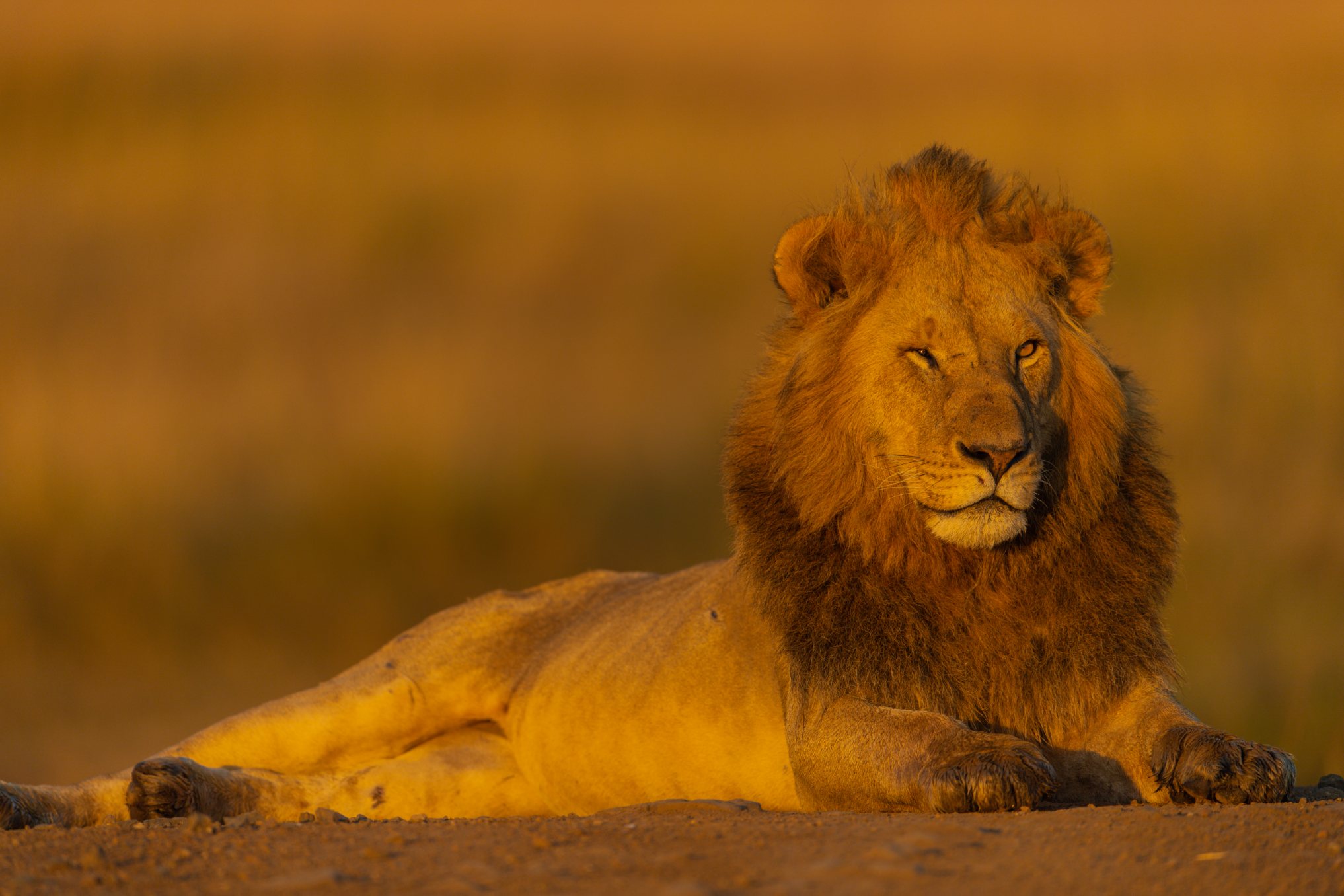
Prides here typically run to a dozen or so related females with their cubs, and a coalition of males holding territory over them. The lionesses do nearly all the hunting, usually cooperatively and usually at night or in the first grey light. The males’ job is territory, and they are very bad at anything else.
Individual prides in the Mara have been studied for decades and are known to guides by name: the Marsh pride, the oldest and most filmed of them, along with the Paradise, Ridge and Sausage Tree prides. Ask your guide which pride you are looking at and you will usually get the family history too.
They are not, incidentally, kings of any jungle. There is no jungle here, and no monarchy either — a coalition holds a territory only until a stronger one takes it.
Elephant
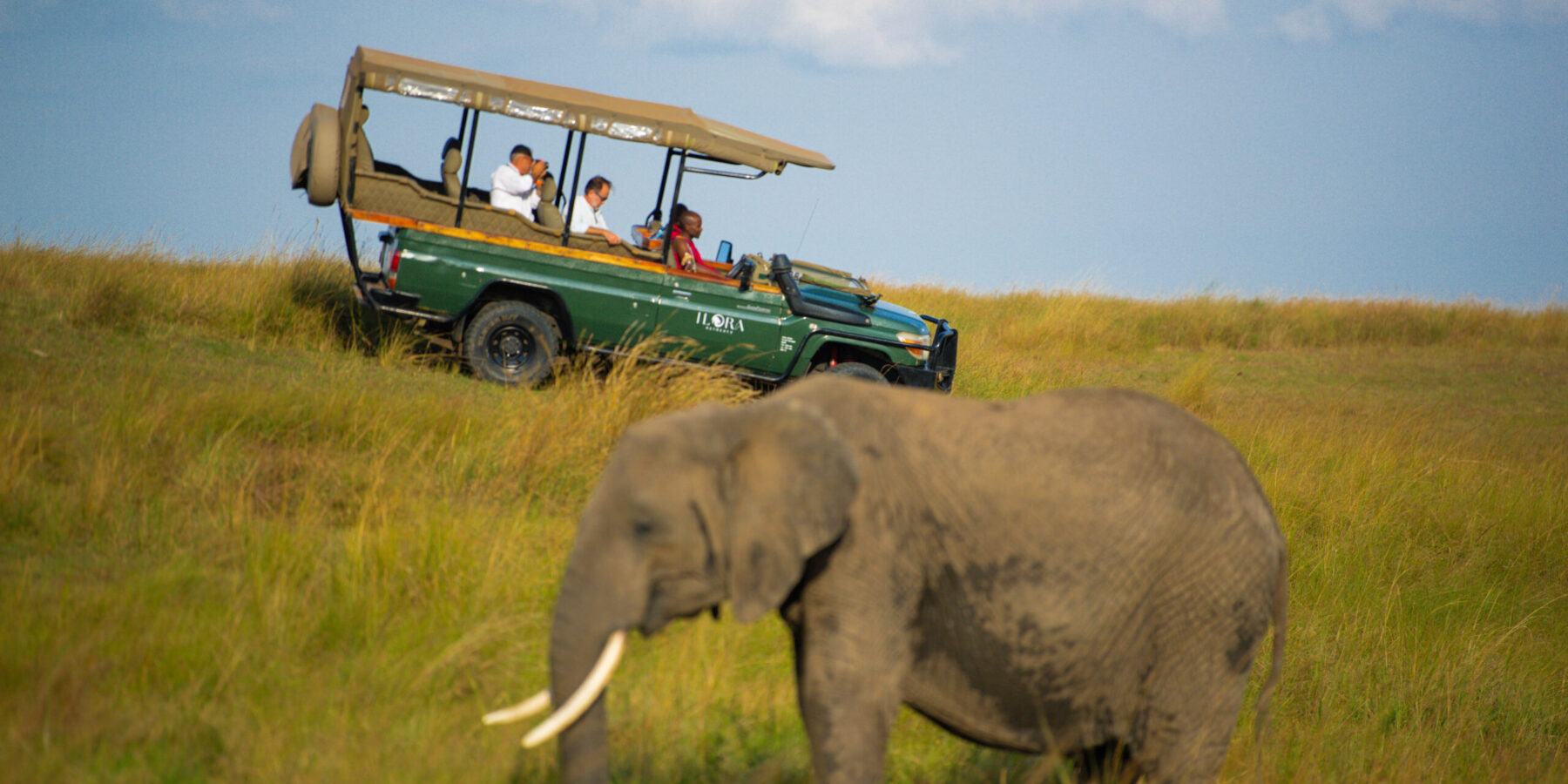
Around two to three thousand elephant move between the Mara and the Serengeti through the year, crossing the border as freely as the wildebeest do.

A herd is a family: ten to seventy related females and young, led by the oldest matriarch, whose memory of where water sits in a bad year is what keeps them alive. Bulls leave in adolescence and live alone or in loose bachelor groups.
An adult bull stands around three and a half metres at the shoulder and weighs up to six tonnes. African elephants are easily told from Asian by the ears — larger, and roughly the shape of the African continent.
They are also, when they choose to be, extremely dangerous, which is precisely why they made the original list.
Leopard
The hardest of the five to find and the one guests most want. Leopards work alone, mostly at night, and spend the day flat along a branch in riverine forest where the light is broken and the rosettes do the rest.

They hunt by ambush rather than pursuit, and they are astonishingly strong — a leopard will haul a carcass heavier than itself vertically up a tree to keep it from lions and hyena. They can leap around three metres straight up, and run at close to sixty kilometres an hour over a short distance.
In the Mara, look along the Talek and Mara rivers and around rocky outcrops. Then look again, slowly. Most leopards are seen by people who were already looking at the tree.
Buffalo
The one that killed the most hunters, which is why it is often called Black Death.
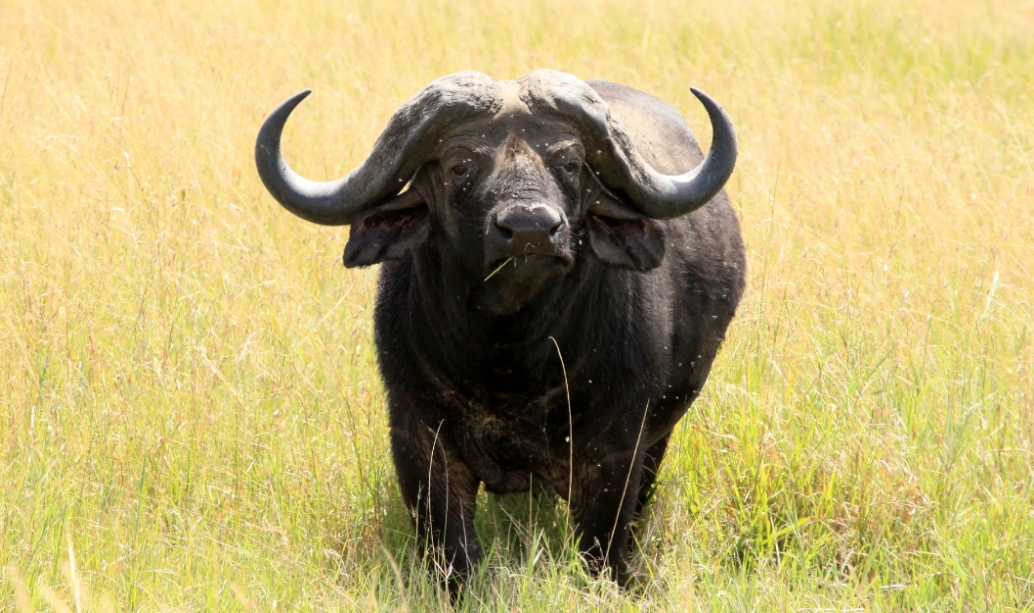
Buffalo do not flee. Threatened, a herd will face the threat down and, if pressed, charge it — and a wounded lone bull is the single most dangerous animal on this reserve. Herds run to several hundred, grazing together and staying near water through the dry months.
A solitary buffalo is worth noting: usually an old bull pushed out of the herd, short-tempered and less predictable than the group he left.
Rhino
Black rhino, and the honest exception on this list.

Somewhere between thirty and fifty move between the Mara and the Serengeti, mostly in the west toward the Mara Triangle. They are critically endangered, solitary, and shy of vehicles. Nobody should promise you one, and any operator who does is guessing.
Their eyesight is poor, which is why a rhino that is unsure of what you are will sometimes charge rather than wait to find out. Hearing and smell make up for it. The horn is keratin — the same material as a fingernail — and can reach fifty centimetres, and it is the entire reason the species is where it is.
What to expect
Lion, elephant, buffalo and leopard in three days is normal here rather than lucky. Rhino is a gift.
The list is a hunting inventory, and it shows. It leaves out cheetah, hippo, giraffe, hyena, and the small cats — animals most guests end up talking about more by the third morning. Use it as a starting point and then put it away.