The first time I watched them hunt, I had the wrong lens on.
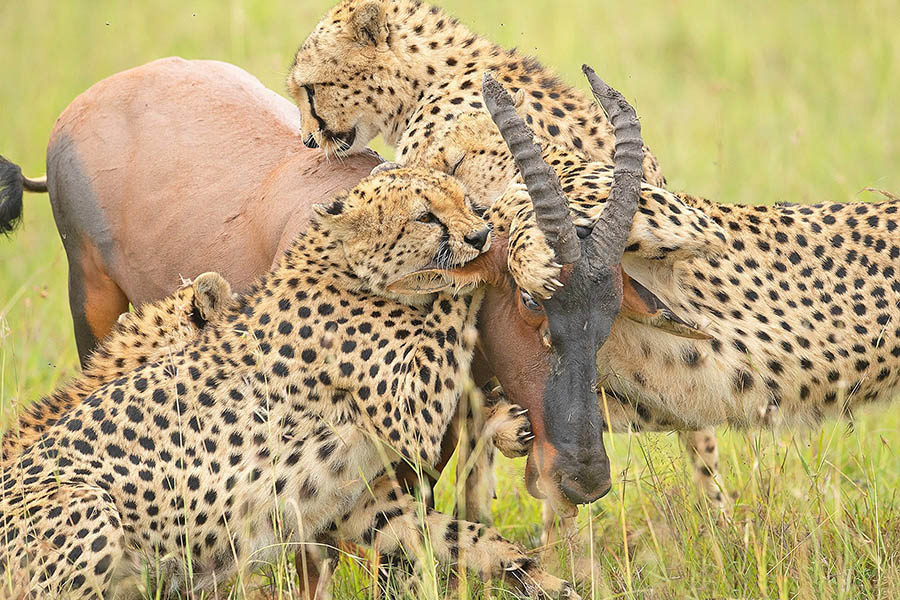
That happens more often than photographers admit. You settle in expecting one thing and the morning gives you another, and by the time you have understood what is unfolding it is already unfolding faster than you can change anything. Five cheetahs came out of the grass towards a topi — an animal several times the weight of any one of them — and what I remember is not the speed. It is how little of it looked like speed at all.
Cheetahs are supposed to be a sprint. This was closer to a conversation.
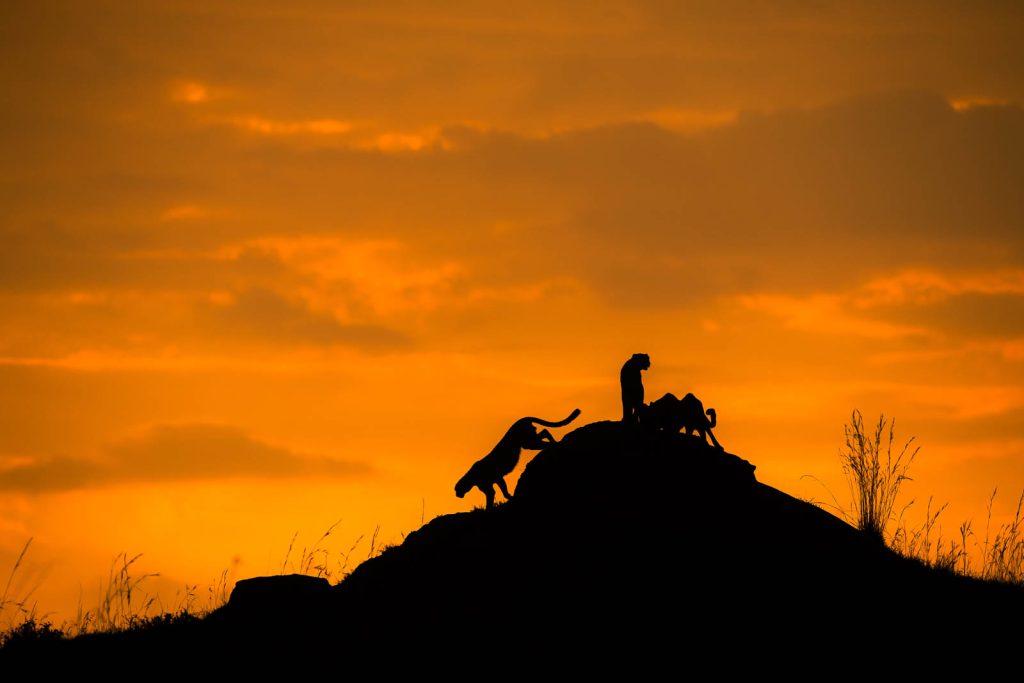
Five males, which should not happen
For most of a cheetah’s life, other cheetahs are a problem rather than a solution.
A female raises her cubs alone and abandons them at around eighteen months, and they stay together a while longer out of habit and safety before the sexes separate. After that, the males have a choice that is not really a choice: go alone, or pair with a brother. Two is common. Three happens. Beyond that, the arrangement usually collapses, because a cheetah’s food is not divisible enough to keep four or five animals interested in each other.
In 2016, five males in the Mara ignored all of that.
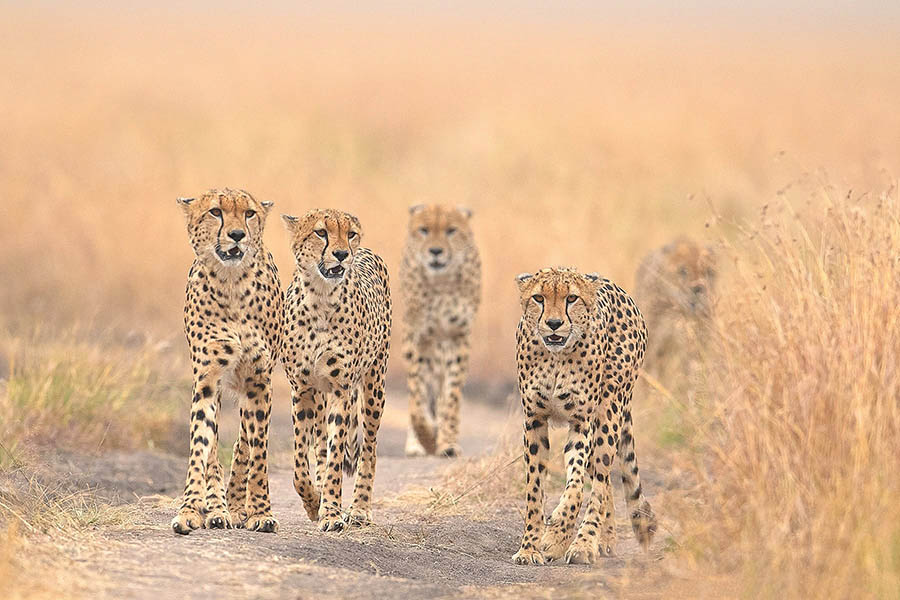
Four of them — Winda, Leboo, Olarishani and Olonyok — were seen moving together in the conservancies north of the reserve. Winda and Leboo were brothers. So were Olarishani and Olonyok. Two pairs, which is unusual but not extraordinary.
Then in December of that year a fifth male attached himself to them. Olpadan had come up from the Serengeti with his sister and parted from her a month earlier. He was the smallest of the five and unrelated to any of them, and within a short time he was leading them.
By the following year all five had settled into the main reserve, and people had started calling them Tano Bora — the magnificent five.
Their names are worth saying properly, because the guides who chose them were describing what they saw. Olpadan, the great shooter. Olarishani, the judge. Winda, the hunter. Leboo, the one who is always within the group. And Olonyok, the one who puts in the effort to do better.
What five could do that one could not
A solitary cheetah in the Mara lives on gazelle and impala, and loses a significant share of what it catches. Lions take kills. Hyenas take kills. A cheetah is built almost entirely for acceleration, which means it is built out of light bone and long muscle and has nothing left over for an argument. It eats fast and looks up constantly while doing it.
Five changes the arithmetic completely.
Tano Bora took topi. They took zebra. They took adult wildebeest — animals many times the weight of a single cheetah, brought down by a group that had worked out how to commit at different moments rather than all at once. And having killed something that large, they could hold it long enough to finish, which a lone cheetah frequently cannot.
They hunted at night, too, which is not what the books say cheetahs do. A film crew documented it and a great many people who thought they knew this animal had to revise the entry.
None of this was sentiment. A coalition is a strategy, and it lasts exactly as long as it pays. But watching it work, it was very difficult not to see something else in it — five animals moving with an understanding of each other that looked, from a vehicle, a great deal like intention.
The complications
The arrangement was never as harmonious as the photographs suggested.
Olpadan led at first, and led by force. He picked fights, particularly with Olonyok, and Olarishani — the judge — stepped in to defend his brother often enough that he ended up co-leading. That held for a couple of years.
Then it turned. The smallest male, who had arrived last and taken charge, slid to the bottom. He fed last. He was the target rather than the source of aggression. At one point he attempted to leave and attach himself to a different pair of males entirely, and it did not take.
There is a version of this story that gets told as betrayal — brothers who turned on each other, a friendship that soured. It is a good story and I do not think it is a true one. Nothing betrayed anything. A coalition is an arrangement between animals who benefit from it, and when the benefit stops for one of them, the arrangement stops too. It is only ever a partnership in the way we mean it if you are watching from a vehicle and short of a better word.
Five, then three, then one
In early 2022, within a few weeks of one another, Olpadan and Olarishani both died. Territorial fighting, in Olpadan’s case. In Olarishani’s, injuries severe enough that a vet could not save him, and nobody is certain what caused them.
The three that remained were renamed Tatu Bora and carried on for a while under Winda, who by then was one of the more experienced cheetahs in the reserve. They hunted. They courted females. They were photographed constantly.
By last year there was one left.
Olonyok — the one who puts in the effort to do better — is the last of them, and he is doing the thing his species is actually supposed to do, which is to move through this landscape alone.
What it was worth watching
I have thought about why these five drew the attention they did, and I do not think it was only the hunts, spectacular as those were.
It was that they were a genuine anomaly. Everything we understood about male cheetahs said five should not hold together, and for several years five did, and while it lasted anyone with a vehicle and some patience could go and watch a thing that was not supposed to exist.
That is a rarer offer than it sounds. Most of what you see in the Mara is the system working as expected — beautifully, but as expected. Tano Bora were the system being wrong for a while.
They also did something less comfortable, which is that they made an entire cheetah population briefly visible. There are perhaps eighty cheetahs across this ecosystem. Cub mortality is severe. Kills are stolen. A cheetah lives a life of continuous, low-grade disadvantage among animals stronger than it is, and the reason we all learned five names is that five of them, briefly, stopped being disadvantaged.
Olonyok is still out there.
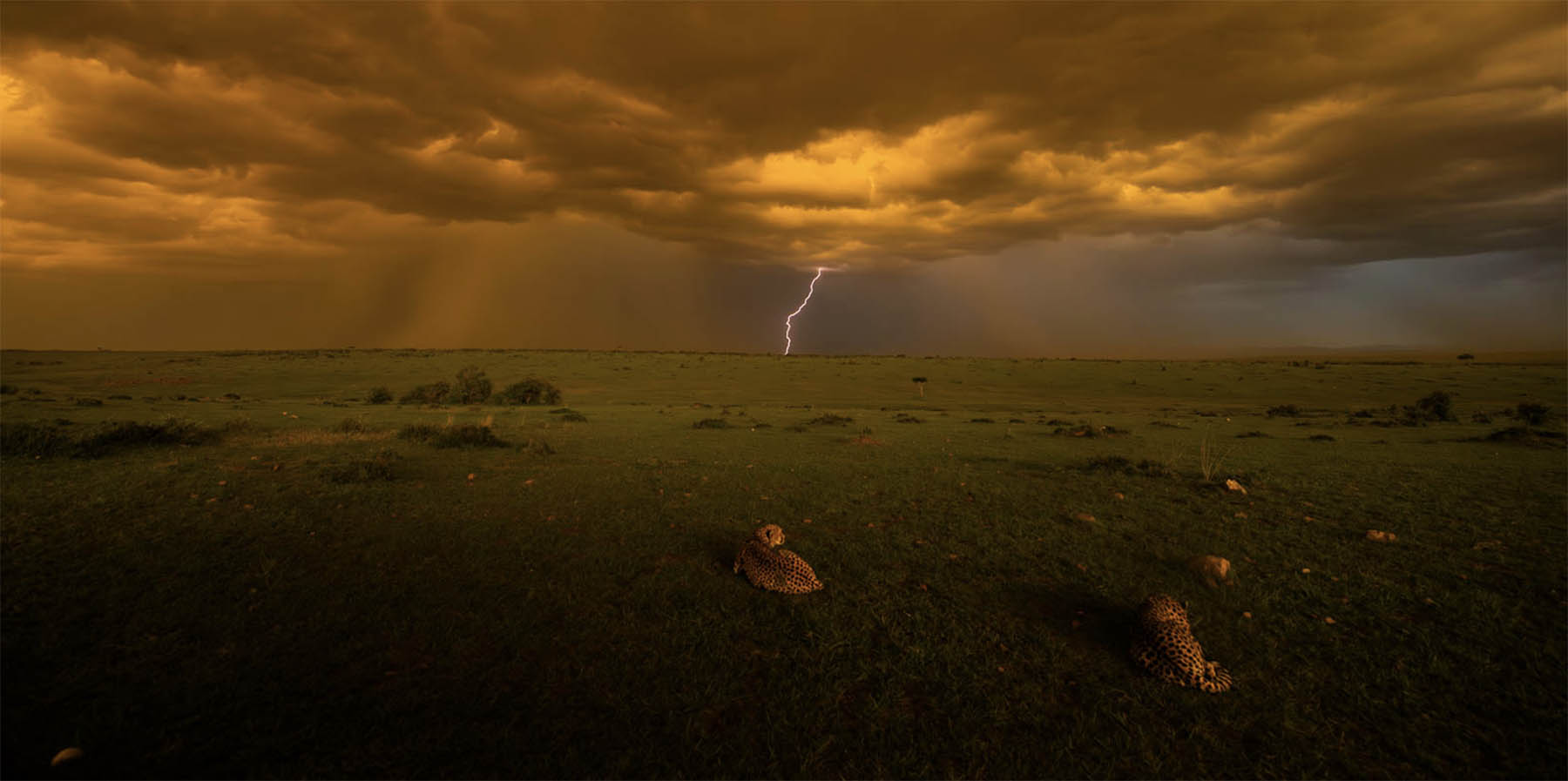
He crosses ground the five of them held together, and he holds none of it now in the way they did. If you see him, you will most likely see him alone on a termite mound at the end of the day, doing what cheetahs do at that hour, which is sit very still and look at a very long way.
There is nothing to be sad about in that. It is simply what a cheetah is, and what these five were was the exception.
Ilora supports the Mara-Meru Cheetah Project and the Mara Predator Conservation Programme, whose researchers have followed these animals — and the eighty or so others in this ecosystem — for years.