How Ilora Redefined Luxury Dining in the Bush
What our guests taught us about food, over two years, mostly without saying anything.
Two years ago I designed the food at Ilora the way I thought it should be done. Two or three seven-course menus a night, carefully composed, and the guest chose one of them. Each menu had an idea running through it.
The courses were sequenced. Someone had thought about the order in which flavors arrived. It looked right. It is what every camp at our level does, and it is what I would have designed again if you had asked me a week later.
It took about a year to work out what was wrong with it.
What was actually happening at the table
The failure did not announce itself. Nobody complained. Nobody sent anything back. That was the problem, and it took me an embarrassingly long time to understand why.
A guest at a small camp is a captive audience in the politest possible sense. They are four hours from a road, they like the people looking after them, and they are not going to make a scene about dinner. So they eat what arrives. They say it was lovely. And then they never ask for anything again for the rest of the stay.
We were reading that as success. It was the opposite. What I eventually noticed was not what people said. It was what came back on the plate. Three courses eaten, four moved around. The fish was untouched by a guest who had eaten every other thing put in front of him. A table where the bread basket was empty, and nothing else was.
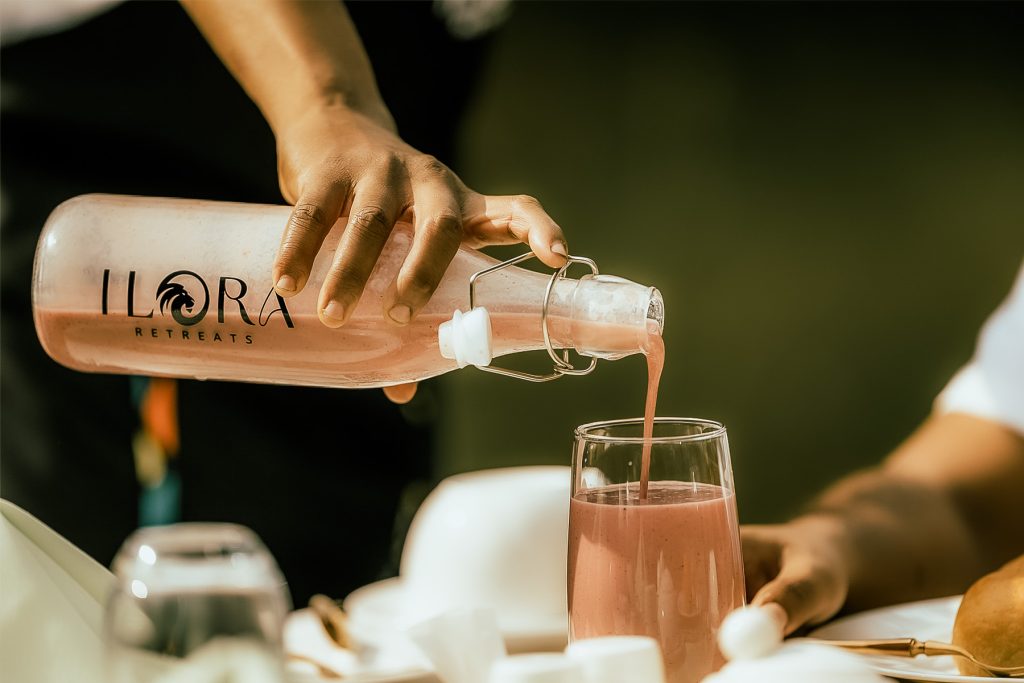
None of that reaches you as feedback. You have to go and look.
The thing a tasting menu actually is
Here is the sentence that changed how we run the kitchen. A tasting menu is one chef’s palate, offered to everybody.
That is not a criticism of tasting menus. In a restaurant it is exactly the point; you have gone there specifically to eat that chef’s idea of a good evening, and you have chosen it from among fifty other restaurants you could have gone to instead.
But a guest at Ilora did not choose our chef. They chose the Mara. They chose a camp inside the reserve, ten minutes from the crossing, and dinner came with it.
So the menu that works beautifully for the people who happen to share that palate leaves everyone else eating politely. Moreover, in a restaurant, that is fine, because they simply do not come back. Here, they come back tomorrow and keep on coming for more and more.
A camp is not a restaurant
The realization, when it came, was less about food than about what a camp is for.
A guest is with us three or four nights, a long way from anywhere, with no alternative within a hundred kilometers. For that time, we are not the restaurant they visited. We are standing in for their home.
And nobody eats seven courses at home.
People eat the thing they grew up eating, at roughly the hour they usually eat it. An Indian family wants dal and roti at eight, not an amuse-bouche at half past seven. An American family with two children wants something the children will actually eat and would rather that it were not a negotiation every evening. A Kenyan guest in Kenya would quite like ugali.
Once you see the camp as a stand-in for home rather than as a restaurant with a view, the set menu stops making sense. You are not curating an evening. You are trying to make somebody comfortable in a place a very long way from where they live.
What we did instead
We stopped composing and started asking.
It sounds simple. It was not, and I want to be honest about the cost, because the version of this story where a good idea arrives, and everything improves is not true.
Today the menu book runs to more than six hundred items across six cuisines. Not six cuisines approximated by one kitchen, but six cuisines cooked by chefs who actually know them. That distinction is the entire thing. A European chef producing his idea of a dal is a worse outcome than not offering dal at all, because now you have disappointed somebody who knows what it should taste like.
It takes fifteen hundred square feet of kitchen, eight chefs, and ten helpers to do this. It requires ordering across far more lines, holding more stock in a place where stock arrives twice a week, and a great deal more planning than a set menu ever needed. Every order has to be prepped, timed, and plated to land on four different tables at the same moment.
I would not go back.
It goes further than choosing a dish
The menu book is the visible half. The more useful half is what happens after somebody has chosen from it. If a guest wants the spice dialled down, they say so, and it is dialled down. If they want the dal made the way their mother makes it, with more garlic, no cream, and tempered at the end rather than the start, they tell our chef, and that is what arrives. If four people would rather have the fish grilled than in the Swahili curry we had planned, it is grilled.
Several guests have simply walked into the kitchen and talked a chef through it. That is now one of my favorite things that happens here.
None of this is generosity. It is cheaper than the alternative, which is cooking something excellent that somebody does not particularly want.
What lunch looked like today
This is not an unusual day. It is simply the day I happened to write this.
Four groups in camp, from four countries, with one lunch service.
Beef steak with chimichurri, crunchy chips, and grilled vegetables. Veg skewers and tofu for the two vegetarians at that table.
Butter chicken, dal, aloo gobi, phulka, and rice, with carrot and ginger soup to start.
Grilled lamb chops and grilled chicken with ugali, chapati, vegetable rice, creamed spinach, and a vegetable casserole. Kachumbari alongside. Kaimati to finish.
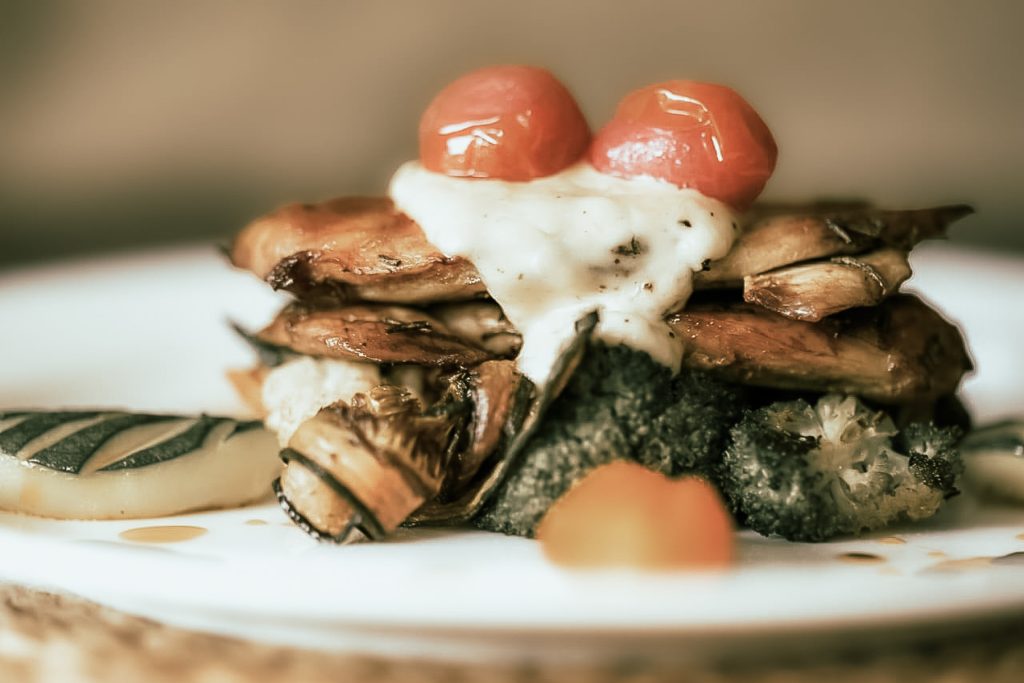
Three Margherita pizzas, one chicken pizza, and two vegetable noodles for a group of five, which is exactly what they asked for and exactly what they got.
Along with that, there was a Swahili fish curry on the menu that four guests would rather have grilled, so it was grilled.
That is one service. The same kitchen does it again at dinner and again at breakfast tomorrow, where the range is wider still because breakfast is the meal people are least willing to compromise on.
The part I find hardest to admit
None of this was our idea.
The set menus were ours. They were carefully thought about, they were well made, and they were an expression of what we believed good hospitality looked like.
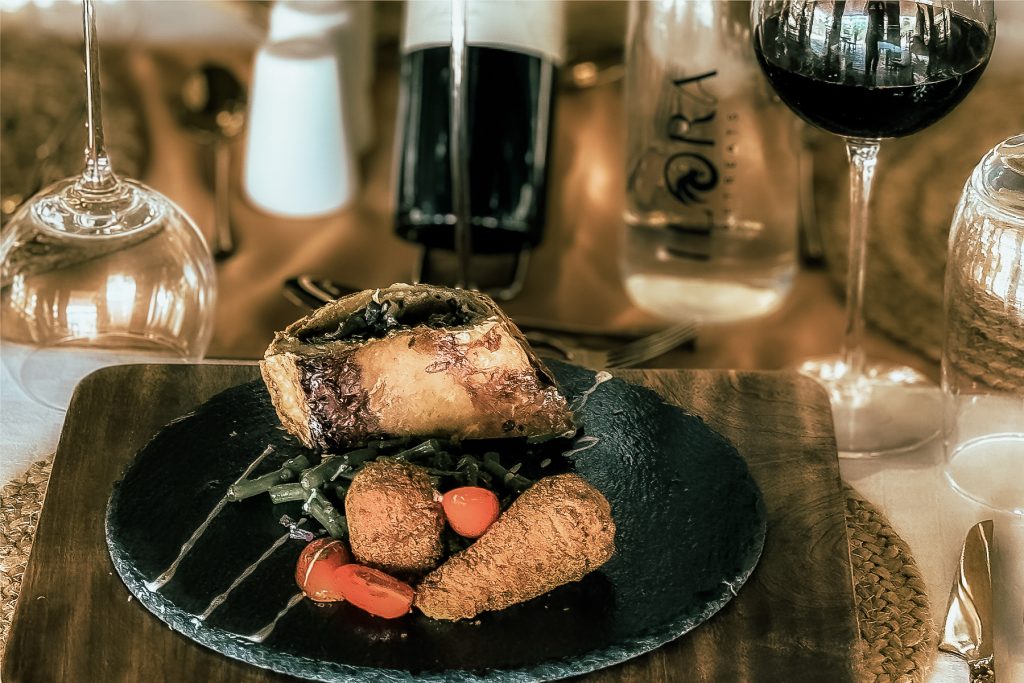
The menu book is the guests’. They taught us, occasionally by saying something directly, far more often by what came back on the plate, and once or twice by standing in our kitchen and showing our chef how it is done at home.
Two years in, the thing I have actually learned is not about food. It is that we were solving for the wrong question. We were asking what a good dinner looks like. The better question was what a good dinner looks like for the person sitting at that particular table tonight.
I do not think we would have arrived at that on our own. We were too pleased with the menus.
A note for anyone running a small property
If there is a transferable lesson, it is probably this.
Silence is not approval. In a small camp, in a remote place, with staff, a guest has come to like it; complaints do not surface. Satisfaction and politeness look identical from the pass.
So go and look at the plates. Ask the waiter what came back, not whether people enjoyed it. Ask at breakfast about last night, when a guest has slept, and will tell you something more honest than they would have at the table.
And then be willing to throw away the thing you designed, which is the hard part, because you designed it carefully and it was not bad. It simply was not theirs.
Ilora Retreats sits on thirty private acres in the central Olkiombo, inside the Masai Mara National Reserve. A second camp opens at Seronera in the Serengeti in 2027.