Why we stopped treating the wildlife as the point — and what filled the space it left.
A guest told me last season that her best morning at Ilora was the one where nothing happened.
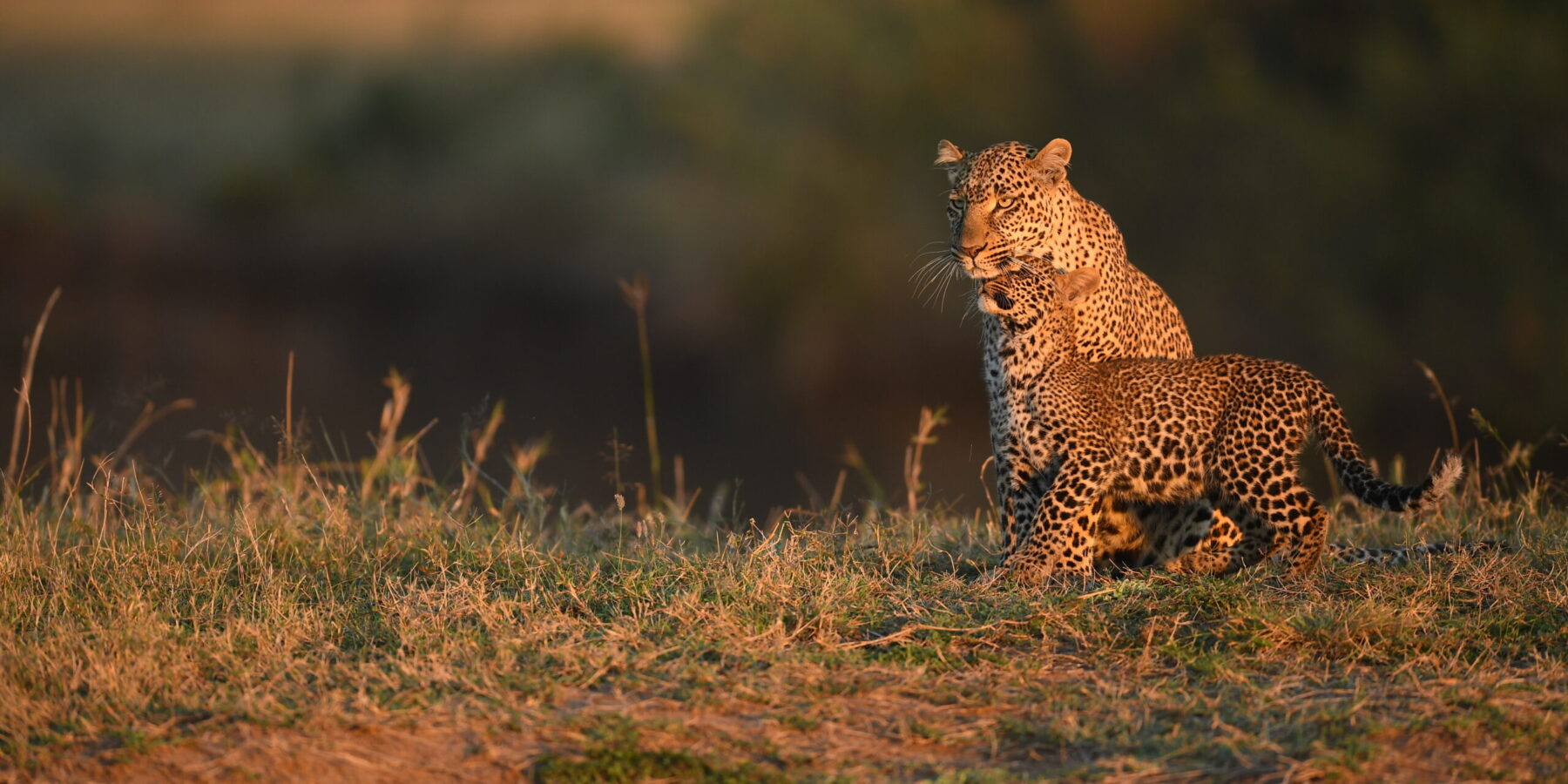
They had gone out at first light and found a leopard within a few minutes, in the riverine woodland not far from camp. She was lying along a branch, and she stayed there. No kill, no cubs, no descent. For close to an hour the vehicle sat with the engine off while she did almost nothing at all, and the family watched her do it. Then they came back for a long breakfast, and the children fell asleep by the pool before eleven.
That evening the mother said it had been the best morning of the trip. I have thought about that sentence more than almost anything else a guest has said to me.
The question everyone arrives with
Almost every guest arrives holding a version of the same question. Sometimes it is asked directly on the drive from the airstrip, sometimes it waits until the first dinner, but it is nearly always there: how much will we see?
It is a completely reasonable question. A safari is expensive, and it is often once. People have saved for it, planned around it, moved children out of school for it. They want to know that the thing they have travelled for will actually arrive. And the industry has taught them to ask in those terms — in numbers of species, in Big Five checklists, in how many days it takes to be sure of a crossing.
I understand the instinct. I had it myself, years ago, when I first came to the Mara with a camera and a list.
But I have watched what actually happens to people over three or four days here, and the arc is remarkably consistent. On day one they count. By day two they have stopped counting and started noticing. By day three they are asking the guides about grass, or about a bird they cannot name, or about somebody’s grandmother in the village. The counting falls away on its own, and what replaces it is better.
The wine at a good table
I have come to think of the wildlife here the way you might think about wine at a very good dinner.
If you sit down at a table where the food and the company are exceptional, it goes without saying that there will be good wine in your glass. Nobody spends the evening evaluating it. Nobody leaves and says the wine was the thing. What they remember is the conversation, and the light, and how they felt walking out into the night afterwards.
The wine is not unimportant. If it were bad, the evening would be diminished. It is simply assumed — and because it is assumed, it stops competing for attention, and everything else gets to matter.
That is what I wanted the wildlife at Ilora to be. Not diminished. Not downplayed. Assumed.
Which is a decision about ground, not about attitude
You cannot make wildlife feel assumed by writing it into a brochure. You can only do it by putting the camp somewhere the animals already are, and then not making guests work for them.
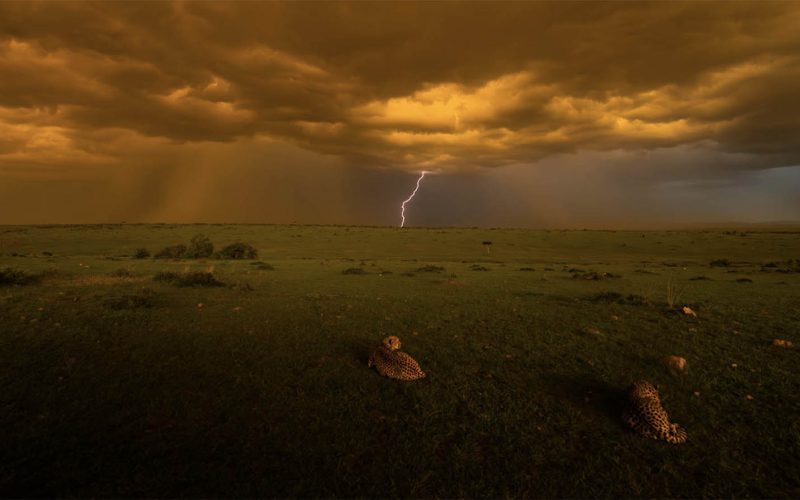
Ilora sits inside the Masai Mara National Reserve, in the central Olkiombo, roughly ten minutes from the main river crossing. Two lion prides hold this stretch of the reserve as their own. A leopard moves through the riverine shadow at dusk. A hippo pool murmurs at the edge of camp all night, and in the low gold light of late afternoon, cheetah cross the open ground beyond the trees.
There is no gate transfer eating the first hour of the morning. There is no long drive out to where the wildlife is supposed to be. Guests are among game shortly after leaving camp, which means the morning does not have to be a campaign.
That single fact changes the shape of a day more than anything else we have built. It is why we could take fourteen tents and set them across thirty acres, with less than five percent of the land carrying any structure. It is why nobody here is under pressure to keep moving.
And it is why an hour with one leopard, engine off, is a perfectly good use of a morning — rather than an hour lost from a quota.
What fills the space
Once the day is no longer a pursuit, a great deal of room opens up. This, in the end, is the part I care most about.
Some guests do not go out every day. Some take a single drive and spend the afternoon in the pool, or asleep in the shade of the veranda, or in the photo lounge going through the morning’s frames. Nobody is counting, and nobody is made to feel they are wasting the trip.
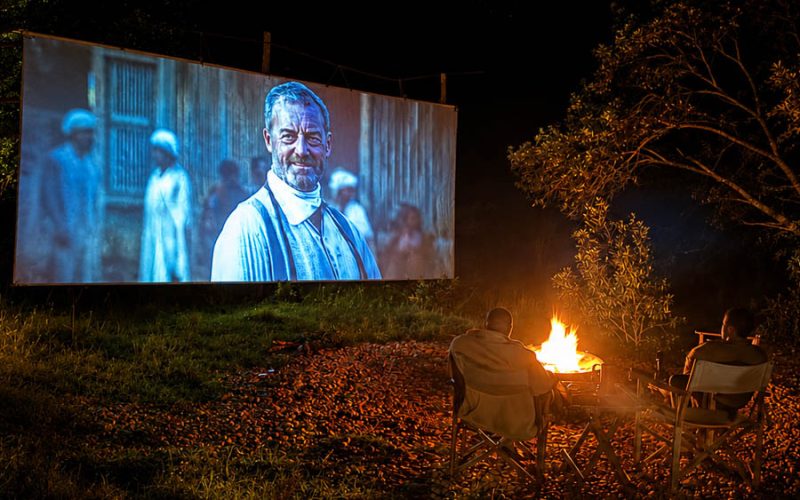
The hours fill themselves. There is a chef who walks the garden each morning and writes the lunch after the harvest, rather than before it. There is a fire, and Maasai colleagues who tell the stories of this land far better than I can. There are telescopes on the sky deck, because the southern sky over the Mara is one of the most underrated things about being here, and most people have never really looked at it. There is a bed that can be made up on that same deck, under no ceiling at all.
For families, there is a naming ceremony, and a Junior Rangers morning that turns a nine-year-old into someone with opinions about tracks. There is the fact that a short morning ending back in camp works for a nine-year-old and a seventy-year-old on the same vehicle — which, if you have travelled with three generations, you will know is not a small thing.
And there is a photographer in residence whose job is not to photograph the animals. It is to photograph the guests: on the vehicle, at breakfast, laughing at something. Those images are edited and handed over before departure. In twenty years of doing this, I have learned that people come home with a thousand pictures of a lion and almost none of themselves in the place they will talk about for the rest of their lives.
The given, and the point
None of this is an argument against wildlife. I built this camp because of the wildlife. I chose this particular ground precisely so that the animals would be close, and constant, and unremarkable in the best sense of that word.
But the sightings are the given. They are the wine.
The point is the whole day — the slow breakfast, the conversation with a guide who has known these prides since before they were prides, the afternoon that nobody scheduled, the sky at the end of it.
That mother was right. Nothing happened that morning. A leopard lay in a tree, and a family watched her, and then they came home and had breakfast.
I do not think there is much I would rather offer than that.
Alankar Chandra is a wildlife photographer and the founder of Ilora Retreats, a fourteen-tent camp in the central Masai Mara. A second camp, Ilora Serengeti, opens at Seronera in 2027.