There is a version of this camp I could build in a year and then leave alone.
Every standard written down. Every process fixed. The coffee before the light, the suites turned the same way, the plate at the right temperature, the greeting at breakfast calibrated to someone who has been awake since half past five and does not yet want to talk. Do that well enough for long enough and you have a very good camp. Guests would leave rested. The reviews would hold.
I think about that version quite often, usually late, usually when something new has gone slightly wrong.
And then I don’t build it.
What I learned before I built anything
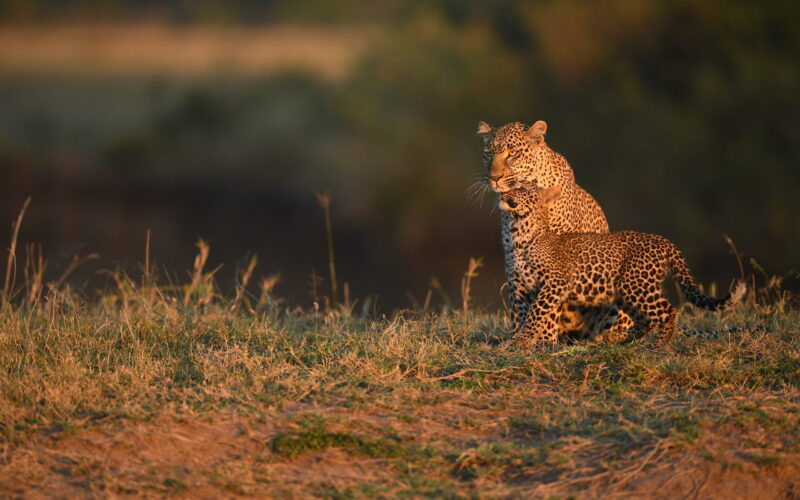
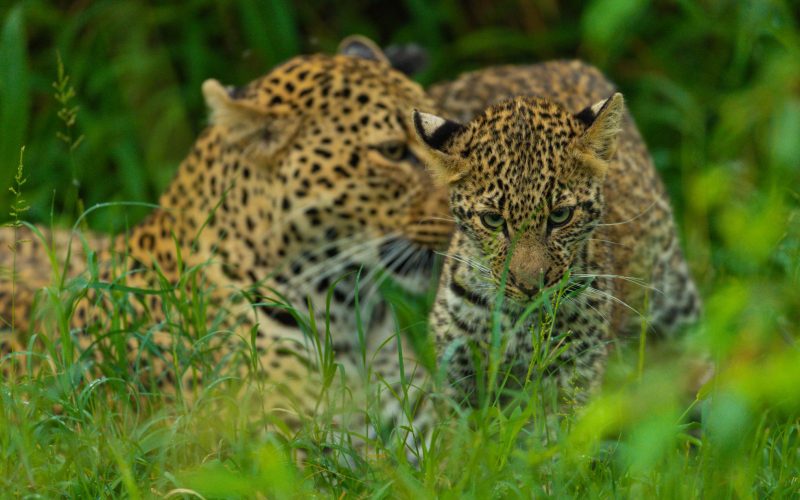
Before this was a camp it was fifteen years of driving around looking for animals.
That is not a romantic description of it. That is what it was. Most of those days produced nothing. You go out before light, you sit, the thing you came for does not happen, and you go back. Then on the four hundredth morning the light and the animal and your position all arrive at the same moment, and you understand why you did the other three hundred and ninety-nine.
Photography taught me two things that turned out to be the whole basis of this place.
The first is that almost everything worth having comes from repetition. The same road, the same hour, the same patience, over and over, until you know a piece of ground well enough to guess what it will do. There is no shortcut and there is no substitute. People imagine the good frame comes from inspiration. It comes from having been there four hundred times.
The second is that repetition alone gets you nothing. If you drive the same road the same way looking for the same thing, you will keep finding the same thing. The frames that matter come from the morning you went left instead of right, or stayed an hour longer than was sensible, or pointed the camera at something you had been driving past for a decade.
You need both. Neither one works without the other. I have never found a way around this in photography and I have not found one here either.
The eighty percent I protect
So most of what happens at Ilora is fixed, and I am fairly rigid about it.
Not because I love process — I don’t, particularly — but because I have watched what it does to a guest. By the second morning people stop checking. They stop asking when the vehicle leaves, stop looking for someone to ask, stop managing their own stay. Something loosens. They arrived from a life that required them to plan every hour and by day two they have handed it over.
You cannot manufacture that with a gesture. It only comes from a hundred small things happening identically, day after day, until a guest’s nervous system concludes it is safe to stop paying attention.
That is the part of this camp I am most proud of and the part nobody will ever mention. Nobody writes home about coffee arriving on time. They write home about the night with the telescope. But the telescope only works because the rest of it was already handled.
I would rather have four flawless unremarkable days than one extraordinary evening surrounded by a stay that drifted.
The twenty percent I cannot leave alone
And yet I cannot leave it alone.
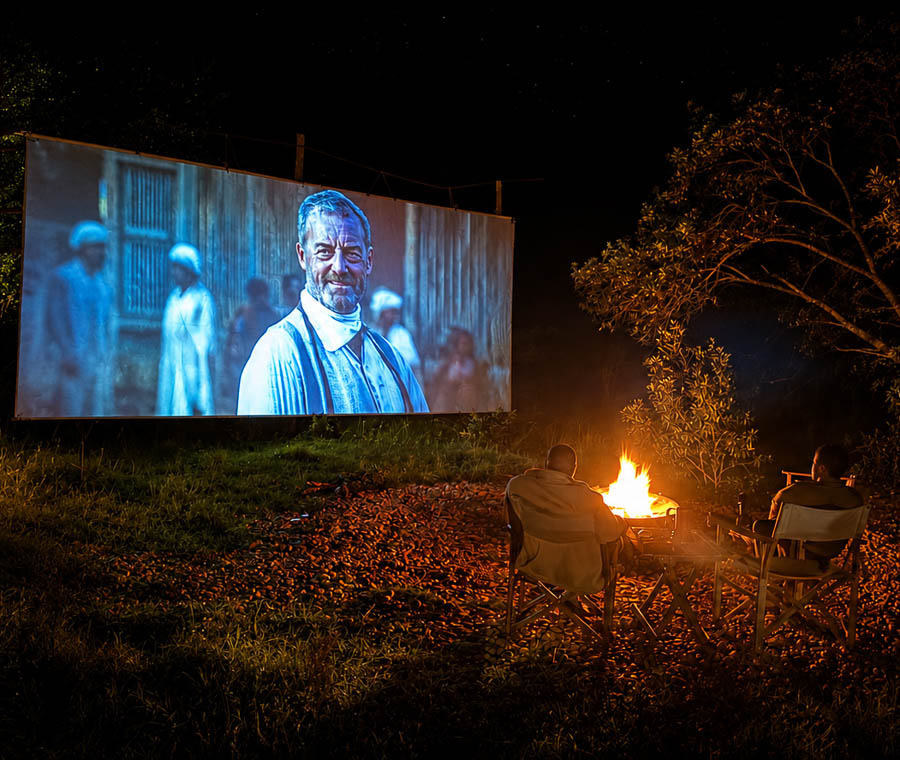
Every few months something here changes. Where a meal is served, or what it is made from, or how far it travelled to reach the table — which is usually not far. A morning walking instead of driving. Lunch at the farm. A telescope on the deck because the sky out here does something you cannot see anywhere with electric light. A photographer going out with guests who want to come home with more than a phone can give them.
Some of these stay. Some are tried for a season and quietly set down, and I have made my peace with that ratio. If everything I attempted worked I would not be attempting enough.
I am aware this is partly temperament. I am not a person who can leave a thing finished. But I have also seen what happens to places that stop reaching — properties that have been excellent for fifteen years and have gone completely still. Everything correct. Nothing alive. The staff faultless and slightly absent. You can feel it within an hour of arriving, and I do not know how a place recovers from it.
Where the argument actually sits
The argument I have with myself is not whether to do both. It is how to stop the second from eating the first.
New things are absorbing. They take planning and energy, they are what everyone wants to discuss, they are what looks good on a website. The standard, meanwhile, asks only that a hundred dull things happen correctly today and then again tomorrow, with nobody watching and nobody praising it.
The pull towards the new is constant, and every time I give in to it beyond its share, something in the eighty percent slips. Not dramatically. A plate arriving three minutes late. A greeting that is warm but not quite the same greeting. Small enough that no single guest would name it, large enough that the second-morning loosening never quite happens.
So most of the discipline of running this place is not inventing. It is refusing to let the inventing cost anything.
Why it matters more here than elsewhere
There is a specific reason this balance is harder in the Mara than in a hotel in a city.
Nothing outside is under our control. The animals move. The rain comes early or does not come. The river rises. The thing a guest most wants to see may simply not be there that week, and no amount of effort on my part will change it.
The only thing I can control is everything inside the fence — the timing, the food, the vehicle, the guide, the bed. So it has to be immovable. When the wild is unpredictable, which is the entire reason people come, the camp has to be the opposite.
That is the actual division. Out there, anything. In here, always the same.
The part I keep coming back to
Our guides have spent their lives on this land. Ask one how he knows where to go and he cannot really tell you, because it is not a route he memorised. It is twenty years of the same ground, applied fresh to a morning that has never happened before.
The expertise is fixed. Its application changes daily.
That is the thing I have been trying to describe for this entire piece, and he does it without thinking about it every morning at six. Most of what I have built here is an attempt to make the rest of the camp behave the way he already does.