Ask a guide what an animal eats and the drive changes. You stop looking for species and start reading the ground — why that herd is where it is, what the grass height means, which animal is about to have a bad afternoon.
The Masai Mara covers 1,510 square kilometres and holds around 95 species of mammal. Almost everything about how they are distributed comes down to diet.
The predators
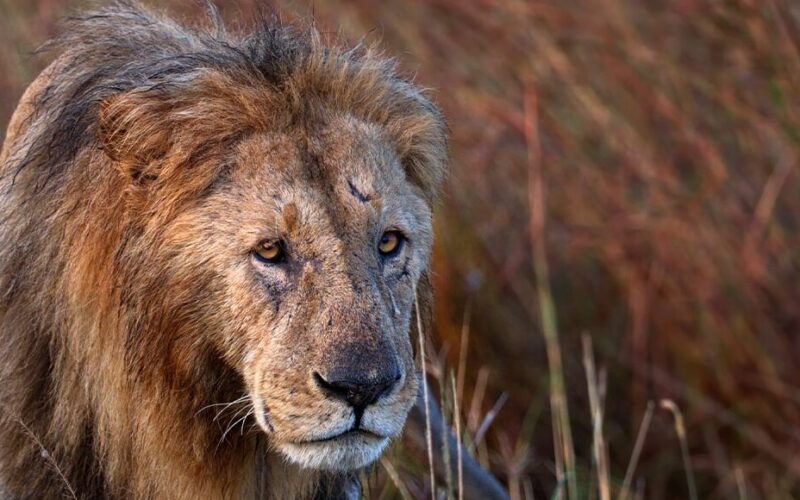
Lion
Obligate carnivores, and opportunists. The bulk of the diet here is zebra, wildebeest, topi, warthog and buffalo, with smaller prey taken when the large is scarce.
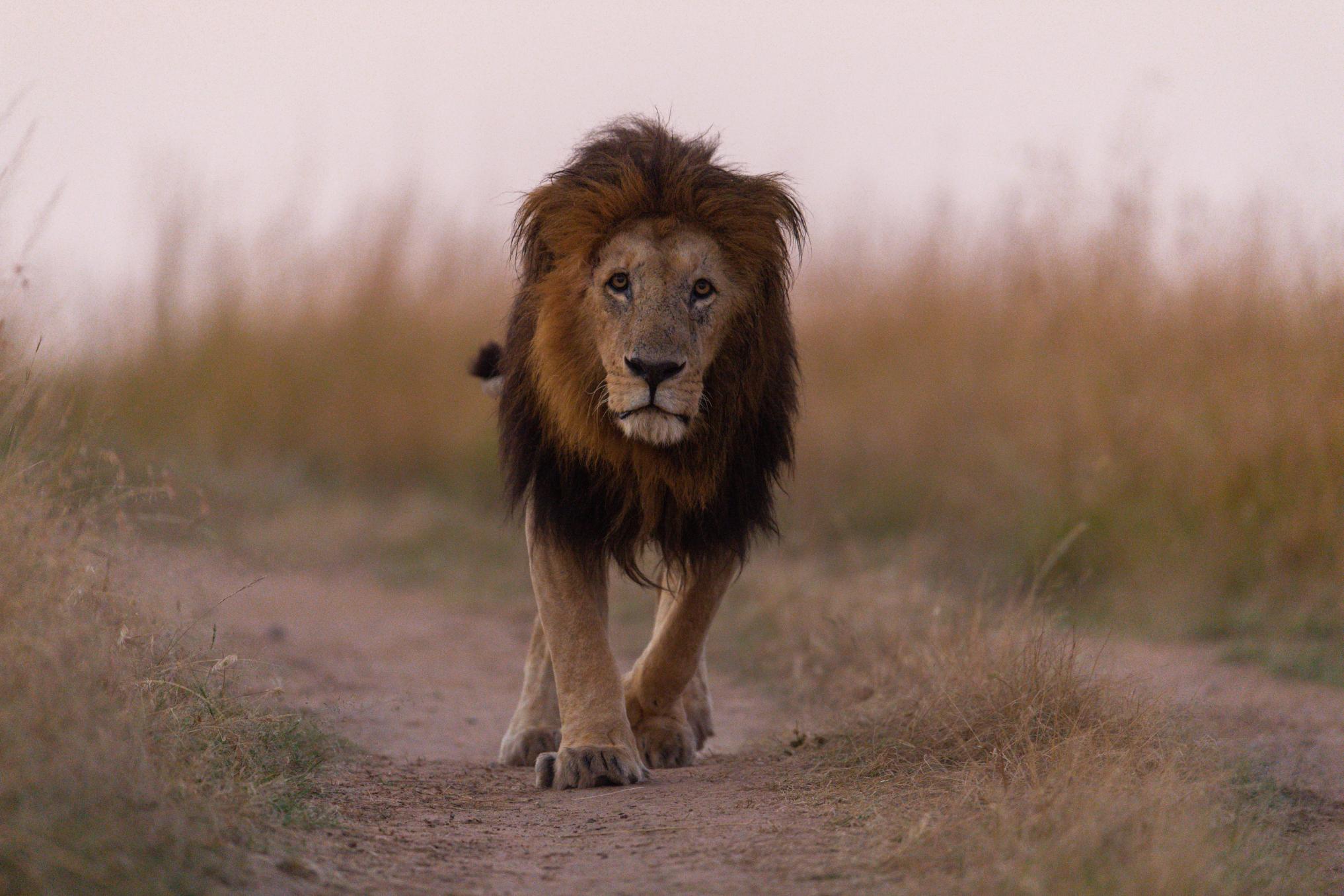
Lionesses do most of the hunting and do it cooperatively — one group driving prey toward another waiting in cover. Males contribute mainly to buffalo, where weight matters.
Lions also scavenge freely, and a substantial share of what a pride eats was killed by hyena or cheetah and then taken off them. The idea that lions hunt and hyenas scavenge is the wrong way round more often than not.
Leopard
The broadest diet of any large African carnivore: over ninety recorded prey species, from impala and warthog down through hare, hyrax, birds and reptiles. It is exactly this flexibility that has kept leopards widespread while other big cats have contracted.

They hunt alone, at night, by ambush. What makes them distinctive here is the hoisting — hauling a carcass heavier than themselves vertically into a tree, out of reach of lion and hyena, and feeding off it for several days. When your guide is scanning branches, this is why.
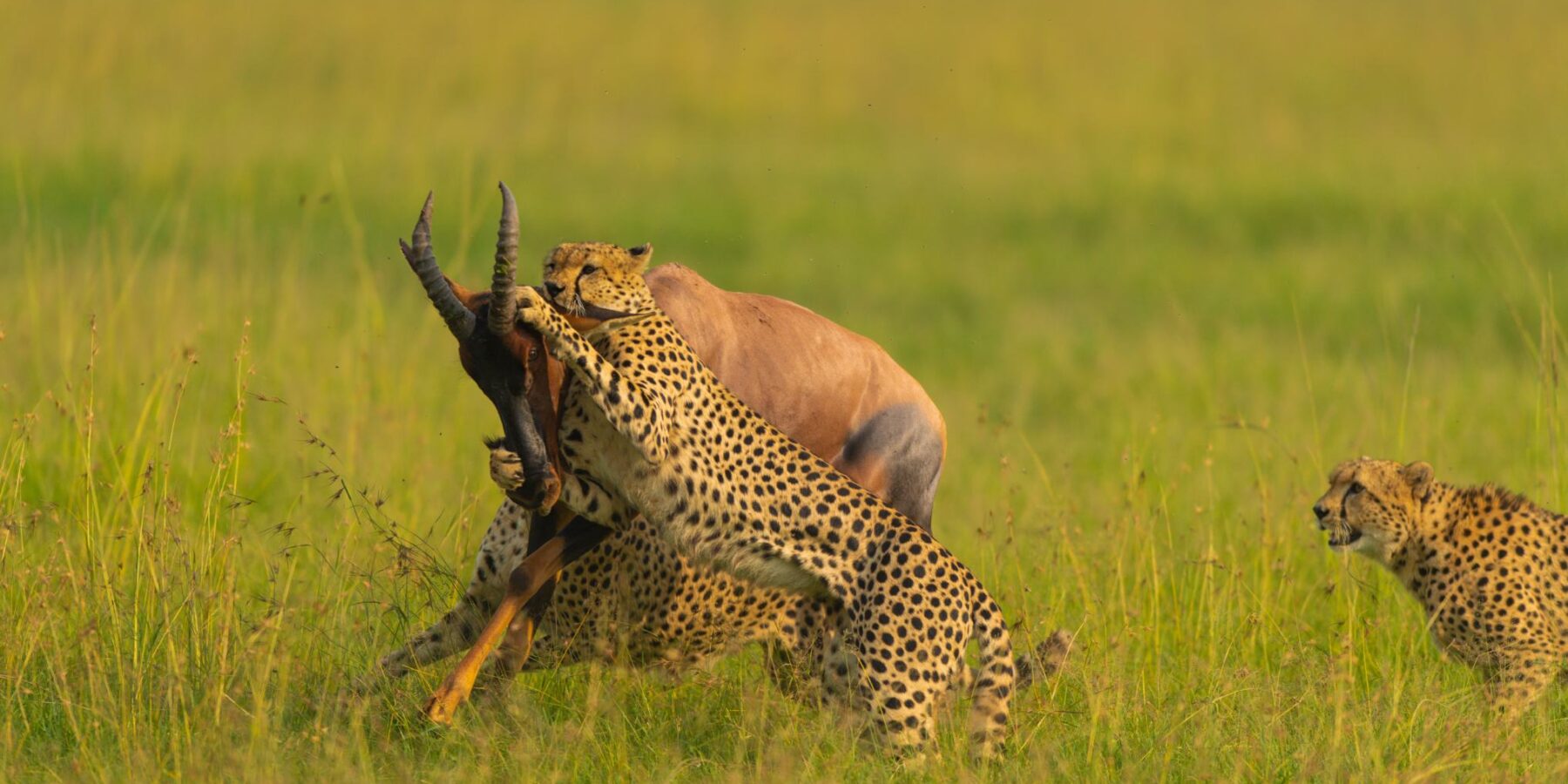
Cheetah
Small and medium antelope — Thomson’s gazelle first, then impala and young wildebeest — plus hare and ground birds.
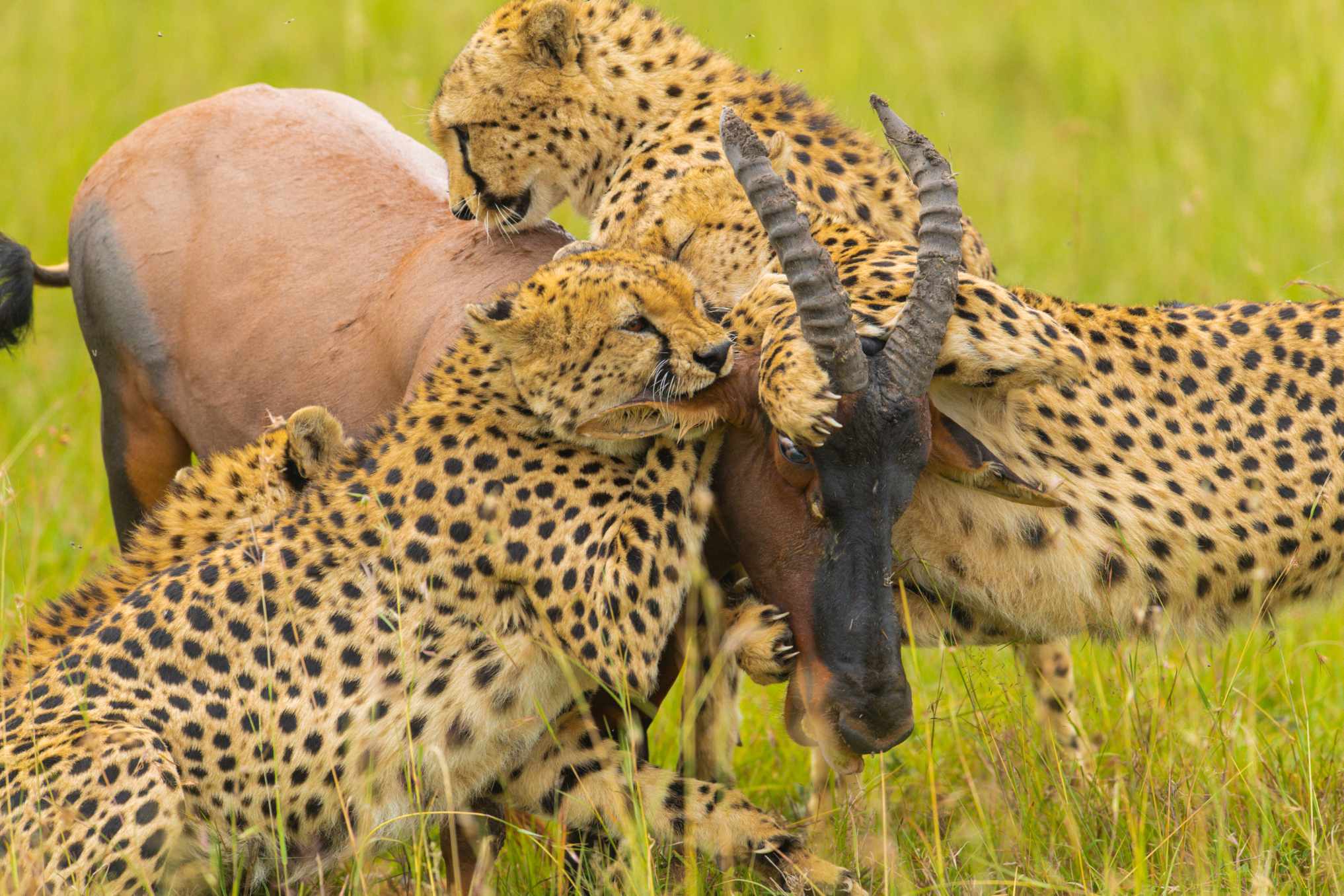
Cheetah hunt by day, which is unusual and not a preference. It is avoidance: hunting in daylight keeps them away from lion and hyena, who will take a cheetah’s kill and often kill the cheetah. They are also built for one short sprint and must eat quickly or lose the meal, which is why a cheetah on a kill looks anxious rather than triumphant.
The grazers
Buffalo
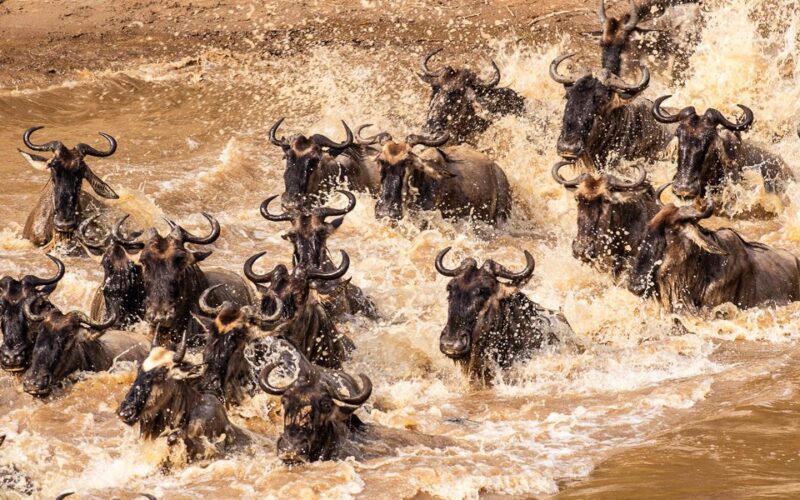
Bulk grazers, and the reason everything else can eat. Buffalo take the tall, coarse grass that other herbivores cannot process, and in doing so open up the shorter, more nutritious growth underneath for zebra, topi and gazelle.

They graze for most of the day and night, prefer fresh green growth, and turn to shrubs, leaves and dug-up roots when the dry season bites.
Elephant
Both grazer and browser, and they eat for sixteen hours a day — up to 150 kilograms of vegetation, of which they digest less than half.

Grass in the wet season, then bark, twigs, roots and fruit as the grass fails. That inefficiency is the ecological point: what passes through them arrives elsewhere as fertilised, viable seed, and no other animal here disperses large seeds over comparable distance. Pushing over trees looks destructive and is how grassland stays grassland rather than closing into thicket.
Elephants also raid crops on the reserve edge, which is the single largest source of conflict between people and wildlife in this landscape.
The browsers
Black rhino
Not a grazer, and the distinction matters. Black rhino feed above ground level on leaves, shoots, herbs and woody plants — around 200 species, and almost no grass at all. The hooked upper lip is the tool for it. White rhino, by contrast, have a square lip and graze.

Their selective browsing keeps woody growth in check and maintains open ground for grazers, which is why they are described as a keystone species. Fewer than fifty move between the Mara and the Serengeti.
Giraffe
Browsers, feeding on acacia leaves, flowers and pods at a height nothing else can reach — which removes them from competition entirely.

The tongue is around forty-five centimetres, prehensile, and dark to protect it from sun. They work around acacia thorns with it. The trees fight back: browsed acacias raise tannin levels within minutes and release ethylene that warns neighbours downwind, which is why a giraffe feeds briefly at one tree, then moves upwind to the next.
Hippo
Grazers, and the reason the river system works. Hippos spend the day in water and come out at night to crop short grass, walking several kilometres to do it.

They return before dawn and deposit the night’s grazing in the river. That transfer — grassland nitrogen moved into the water every night by several hundred animals — feeds the invertebrates and fish the whole river depends on.
They will occasionally feed on carcasses, which is documented and still poorly understood. It is rare, and it is not a diet.
Wild dog, and an honest note
African wild dog are endangered, hunt cooperatively with the highest success rate of any large African predator, and take mainly impala and antelope calves.
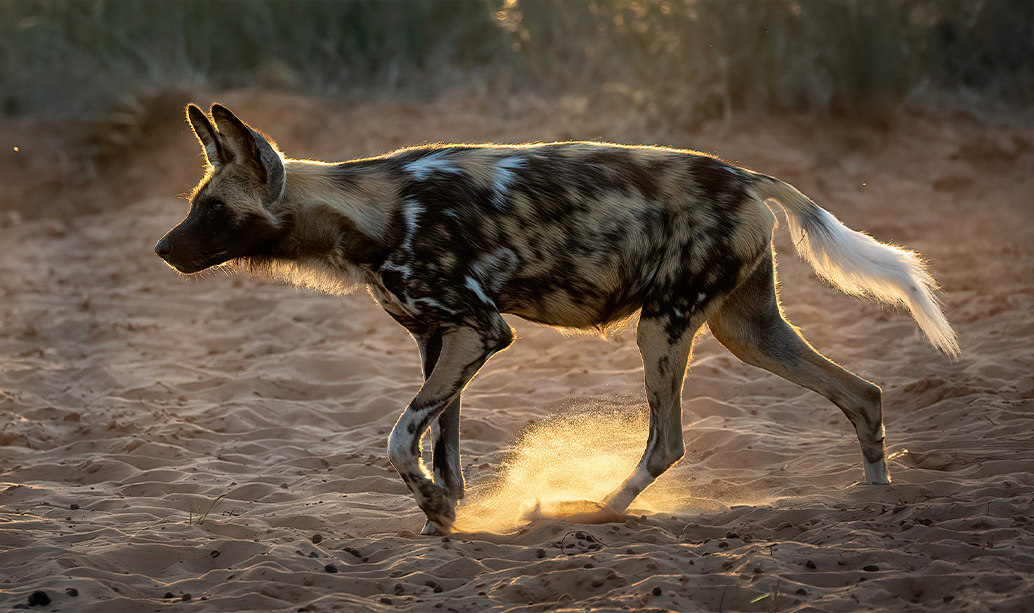
They are also functionally absent from the Masai Mara. Occasional individuals and small packs pass through the bordering conservancies, and the reserve itself sees them very rarely. Any operator listing them as something you can expect to see here is selling you something. For wild dog, you want Laikipia, the Selous, or northern Botswana.
Why it is worth asking
The Mara looks like one habitat containing many animals. It is not. It is several dozen overlapping diets, and the grass, the trees, the river and the herds are all shaped by which mouth is where.
Ask your guide to explain a sighting in terms of food and you will understand more in twenty minutes than in three days of ticking off species.