The Masai Mara and the Serengeti are usually described in terms of wildlife: the herds, the predators, the crossings. The people who have kept that land intact for four centuries get a paragraph, if that.
Africa’s most recognised people
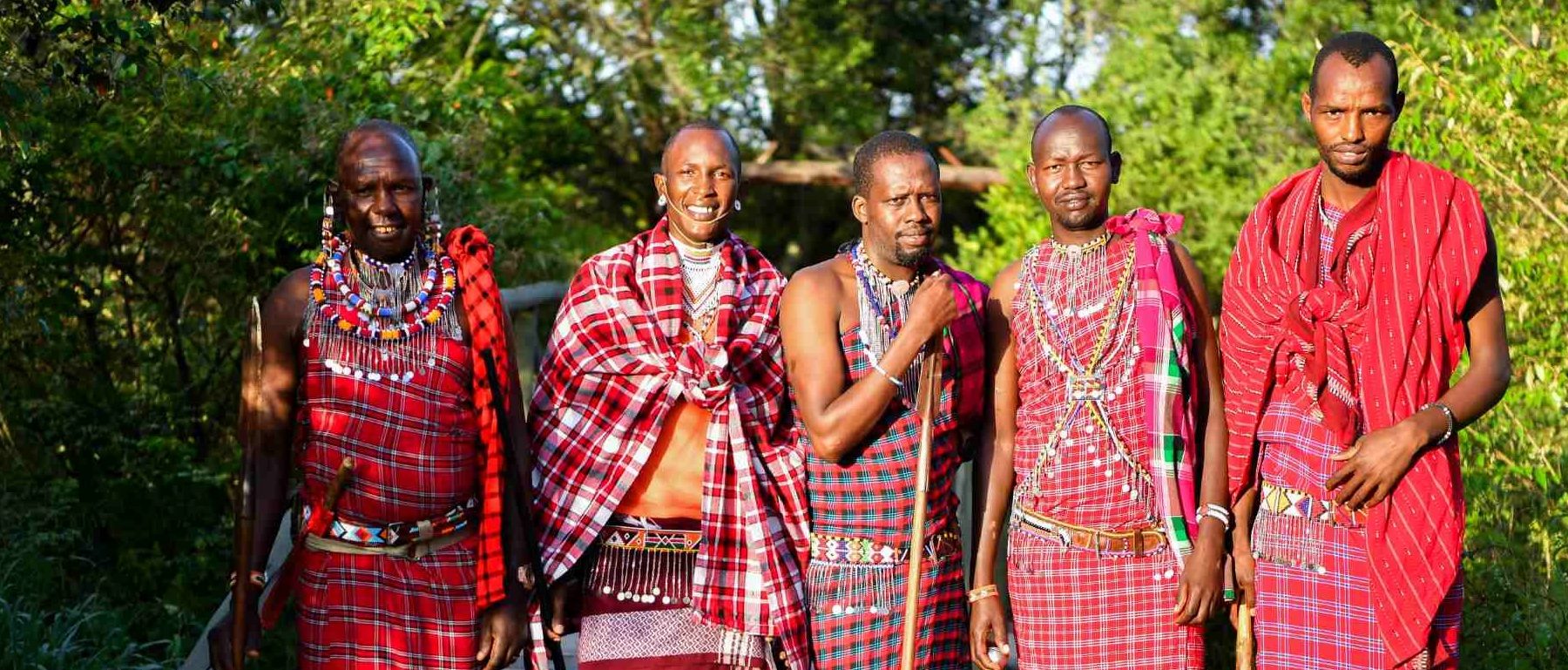
Red shukas, beadwork, and a reputation that has travelled further than almost any other African culture. The Maasai are semi-nomadic pastoralists whose lives still turn around cattle, organised into age sets and clans, each with defined responsibilities. They are also among the few communities to have held their identity intact through a century of pressure to give it up.
That identity is not preserved in a museum sense. It is working. The age set a man entered at fourteen determines who he sits with at fifty. Wealth is still counted in cattle and children rather than in cash. Decisions that matter — when to move stock, when to open reserved grazing, how a dispute ends — are still taken in assembly by elders rather than by an individual.
Why the land looks the way it does
There is a Maa proverb — keeku nameni eriroi — which translates roughly as “even that which is despised can triumph”. It is usually read as a caution against underestimating small things.
The Maasai lost most of their grazing land under colonial rule and spent the century since fighting to recover rights over what remained. Through all of it, they went on managing the same ground the wildlife depends on. The conservancies bordering the Mara exist because Maasai families agreed to lease their land and keep it open rather than fence and farm it, and that decision is the single reason the ecosystem still functions at its current size.
It is worth being concrete about the mechanism, because “community tourism” is a phrase that hides more than it explains. In a conservancy, individual landowners lease their parcels into one continuous block and receive a payment per acre every month — whether or not a single guest arrives that month. Fences come down. Grazing is planned across the whole block, with areas rested and reopened on a schedule. The number of camps and vehicles allowed is capped by agreement.
The monthly payment is what makes the rest possible. A family with predictable income does not need to fence its parcel, plough it, or hold more cattle than the grass can carry as insurance against the next drought. Take the payment away and every one of those choices reverses, rationally, within a season.
Many Maasai now work as rangers, scouts and guides. The knowledge they bring to that work is not something a training course produces. A guide who grew up moving cattle through this country knows which trees fruit in which month, what a two-hour-old track looks like against a two-day-old one, and which direction a herd will break when something moves in the thicket.
What a village visit actually involves
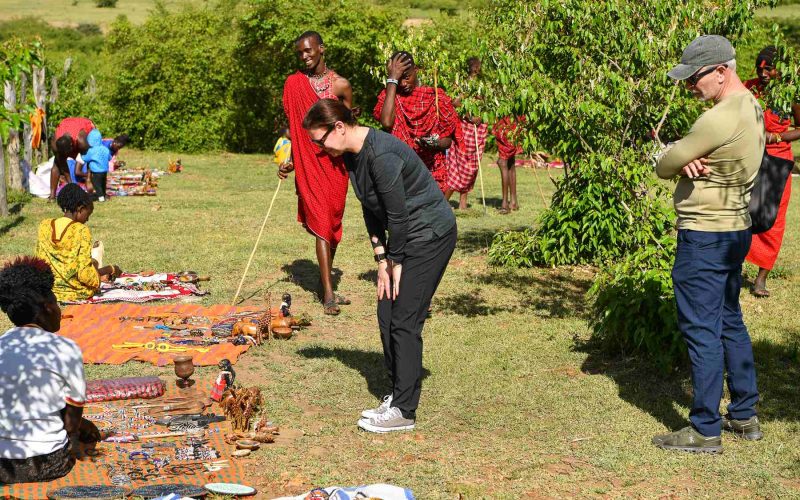
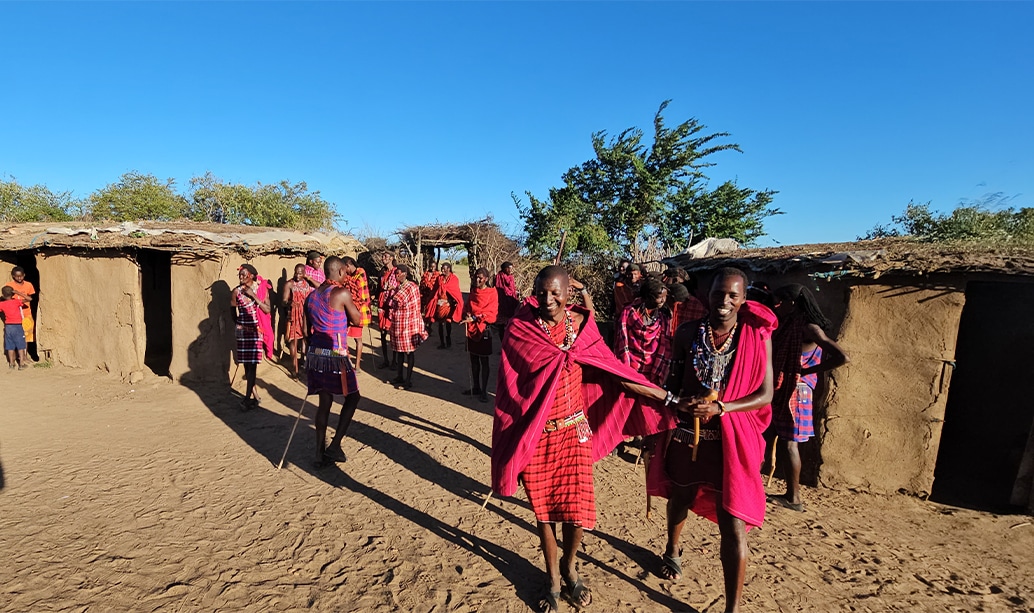
You go with a guide who translates. You are shown inside a home — a low structure built by the women from timber, mud and dung, cool in the middle of the day and darker than you expect. You sit with elders. You are usually invited to join the adumu, the jumping dance, which you will not be good at.
The house is worth slowing down for. It is built entirely by women, over weeks, and rebuilt each time the family moves. The frame is bent saplings; the walls are a mix of mud, ash, grass and cattle dung that sets hard and sheds rain. There are no windows to speak of, which strikes most visitors as a design fault until it is explained: small openings keep the interior cool through the middle of the day, keep smoke moving out along a predictable path, and keep insects down. A fire burns low inside almost continuously, and the smoke in the thatch is doing pest control.
The homestead itself — the enkang — is a ring of houses inside a thorn fence, with the cattle brought into the centre at night. Every element of that layout is defensive, and it works. Predators do not enter a well-maintained boma.
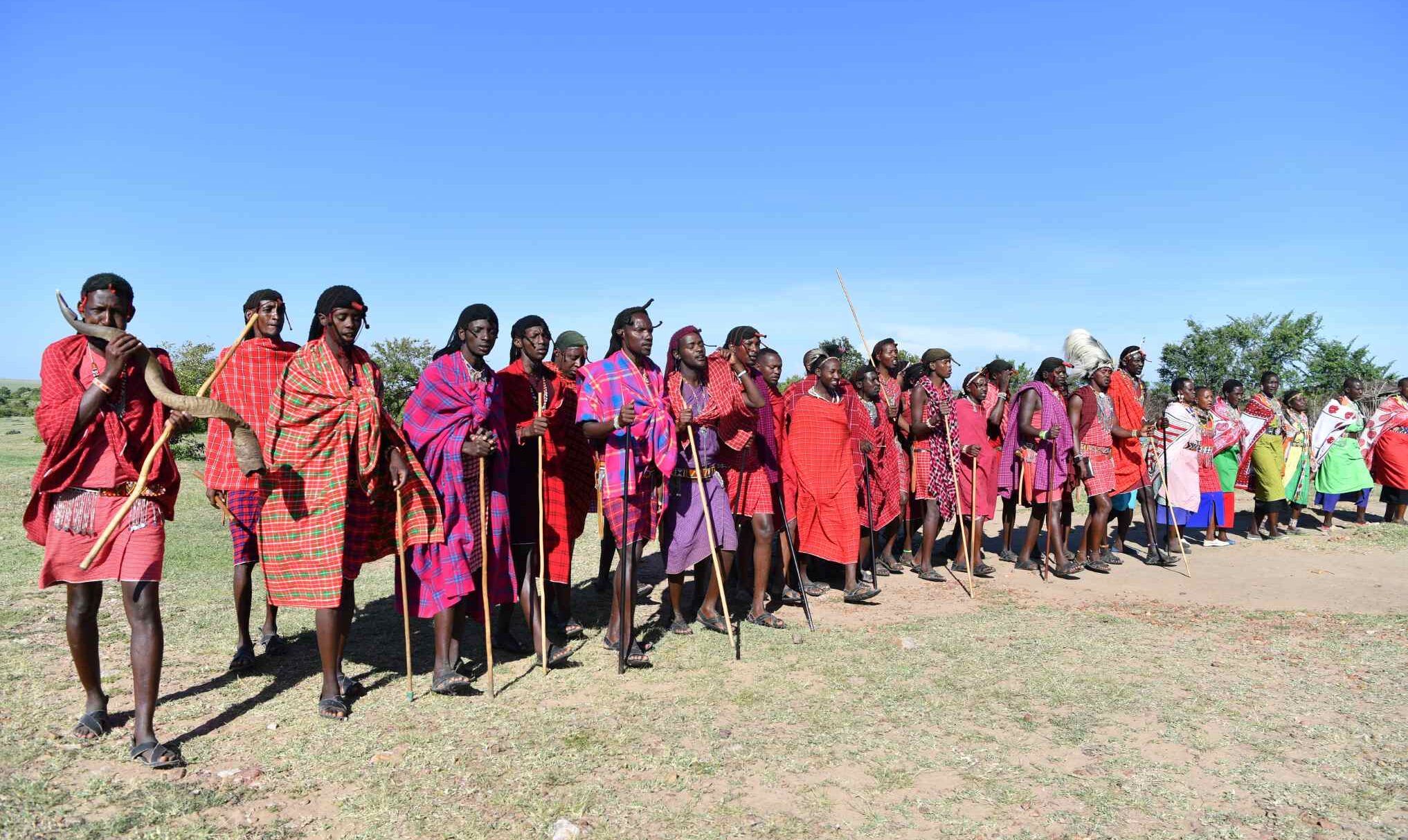
Beadwork is where most of the conversation happens. The colours are not decorative: they carry meaning, and the women will explain it if you ask. Red for the blood of cattle and for courage; white for milk and for peace; blue for the sky and for rain; green for the grass that follows the rain; orange and yellow for hospitality. Specific combinations mark an age set, a marital status, a ceremony. What looks like ornament is closer to a uniform with a rank on it, readable at distance by anyone raised here.
Blessings and ceremonies, if you happen to be there for one, are the part guests remember for years.
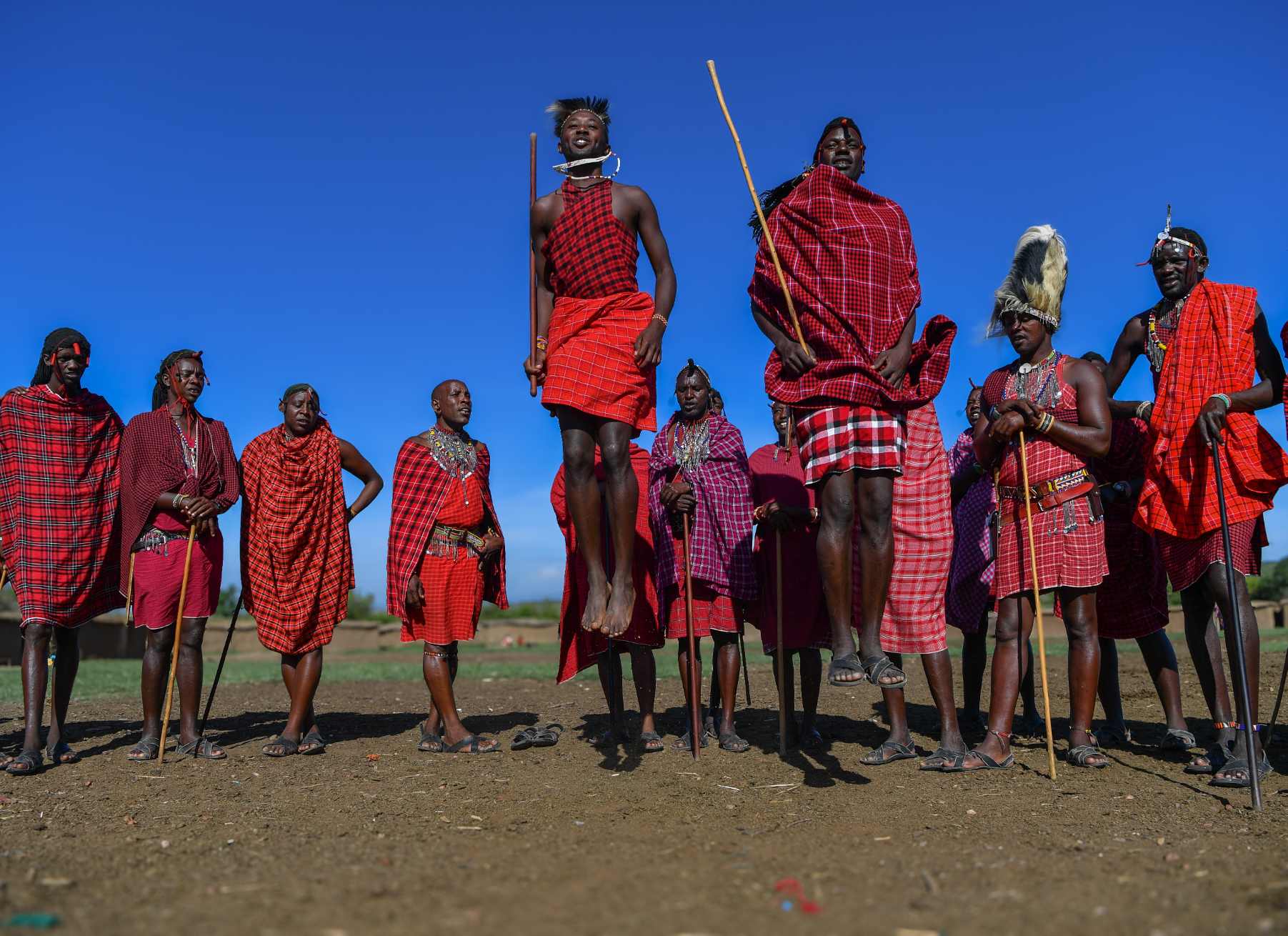
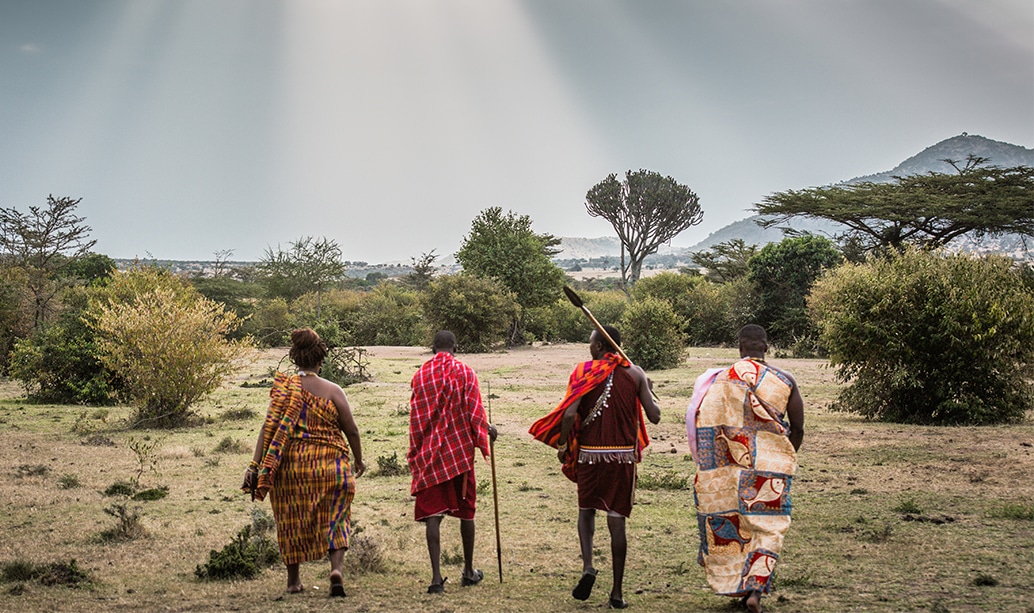
Walking out with a warrior or an elder afterwards is worth more than the village itself. You learn which plants are used for what, how cattle and wildlife are kept from competing, and how a family decides where to move next. Ask about the trees. The wild fig, oreteti, is never cut — it is a place of prayer, and it also happens to be the single most important tree for birds, monkeys and bats in a dry month. A religious prohibition doing the work of a protected-species list is the kind of thing you only learn by asking.
What the community gets
Direct income, and the leverage that comes with it. Village visits and lease payments fund schools, clinics and water, and give communities a position from which to negotiate with county and national government over land rights. For Maasai women, selling beadwork is often the first independent income in a household, and that changes decisions inside a family as much as outside it.
There is a second effect that is harder to measure and probably larger. A community whose income depends on wildlife being present has a direct interest in it staying present. Compensation schemes for livestock lost to predators only work where there is money to fund them. Snare-clearing patrols only happen where someone is paid to walk. Nearly every practical conservation activity in this landscape runs on tourism revenue reaching the households that make land-use decisions.
This only holds if the money arrives. It frequently does not.
How to tell a real visit from a staged one
Choose an operator that works with a named community on agreed terms, not one that stops at whichever village is nearest the road. If the visit feels staged — a performance, a gauntlet of stalls, a fixed fee to a middleman — it is staged, and the community is seeing very little of what you paid.
Some specific things to ask before you go. Which community is this, and what is the camp’s relationship with it? How is the fee split, and who receives it? Is the same village visited every time, or whichever one is convenient? Is there a rota between families, so the income does not concentrate in one household?
A camp that has done this properly will answer without hesitating, because the arrangement is fixed and written down. A camp that has not will change the subject to how authentic the experience is.
The rest is ordinary courtesy. Ask before photographing anyone, and accept no. Dress modestly. Ask real questions rather than confirming what you already think — “how many wives does he have” is the question everyone asks and nobody enjoys answering; “who decides when you move, and how” opens a genuinely interesting hour. If you buy something, buy it from the woman who made it. If you do not want to buy anything, decline politely rather than avoiding eye contact.
The honest case against
It should be said that not everyone should go, and there is a reasonable objection to the whole format. Being looked at is not the same as being understood, and a forty-minute visit can flatter a visitor’s sense of having engaged while leaving the community with a small fee and an afternoon spent performing.
The counter is that the alternative — coming to Maasai land, using Maasai guides and Maasai-leased grazing for a week, and never meeting anyone outside a staff uniform — is worse, not better. But the objection is real, and the way to answer it is not to go more politely. It is to go where the terms are clear, ask about the things that are actually interesting, and spend the money where it lands.
Ilora’s village visits are arranged with the community whose land the camp sits on, and the terms are the same every time. We are glad to explain exactly how it works before you decide whether you want to go — including if the answer is that you would rather not.