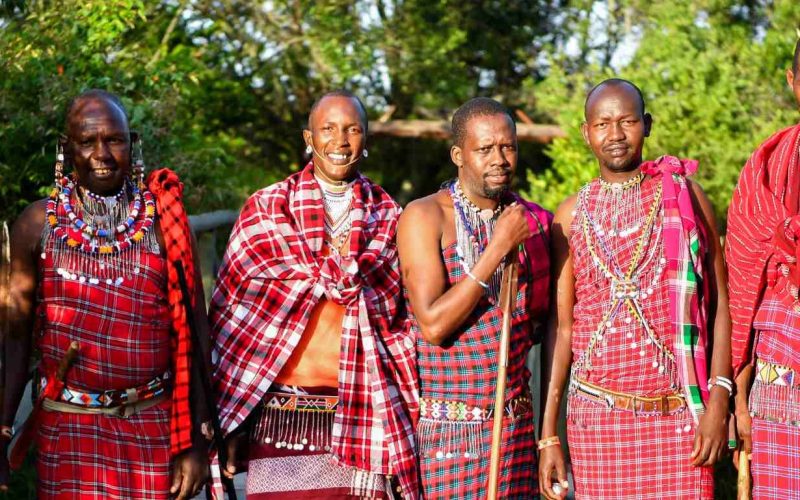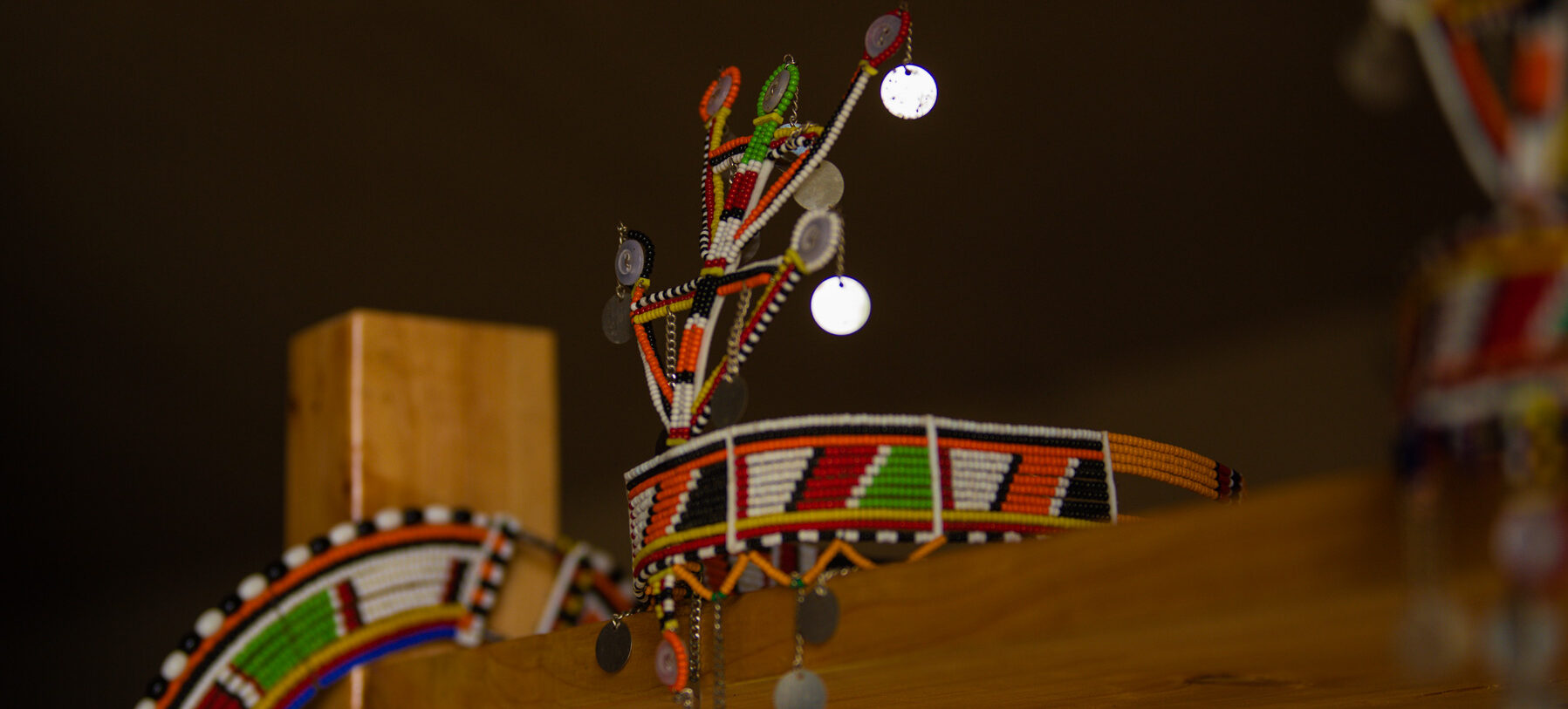
Everything a Maasai wears is legible. Age, marital status, standing in the community, whether there has been a birth or a death in the family, what ceremony is being held — it is all in the beadwork, and it can be read from across a field by anyone who grew up with it.
Visitors see jewellery. What is actually there is a written language, made by hand, by women, without a single tool.
Whose work it is
Beadwork is women’s work, and it always has been. Women make it for themselves, for their husbands and sons, and for every ceremony the community holds. The skill passes from mother to daughter, and it is taught the way most Maasai knowledge is taught — by sitting alongside, over years.
The sitting matters as much as the beading. Women work in groups, and the group is where news travels, stories are told and decisions get made. Take that away and you have removed more than a craft.
How it is made
No machines and no tools. Historically the thread came from plant fibre and sinew, and the beads themselves from seed, bone, clay and shell. Glass beads arrived through the coastal trade in the nineteenth century and were adopted quickly, which is why the palette people now think of as ancient is in fact relatively recent. Today the thread is often nylon salvaged from grain sacks.
For a necklace or an earring, beads are strung individually on wire or thread to a pattern held in the maker’s head. For a collar, a belt or a headpiece, a base of leather or tanned hide is cut first and the beads sewn directly onto it, row by row. Copper and brass wire is worked into coils and spirals alongside.
A large married woman’s collar takes weeks.

What the colours mean
- Red — blood, bravery, and cattle. The dominant colour, and the one the Maasai are known by.
- Blue — sky, and the rain that comes from it.
- White — milk, and with it purity and health.
- Green — grass, and the land that feeds the herds.
- Orange — hospitality, and the gourd that milk is served from.
- Yellow — the sun, and fertility.
- Black — the people themselves, and the hardship they have come through.
Almost every colour traces back to cattle, water or the land. That is not coincidence; it is the whole worldview, worked in glass.

What the patterns say
Size and quantity signal wealth and standing: more beads, larger pieces, higher status.
Morans wear bright pieces weighted to red and black, marking their stage of life. Married women wear stacked flat collars — enkarewa — usually in blue and white, and a woman changes her patterns when she marries so the change is visible before she says anything. Elders wear simpler work, and both men and women wear elaborate headpieces for ceremony.
None of it is chosen for aesthetics alone. A woman putting on beadwork in the morning is choosing what to say.
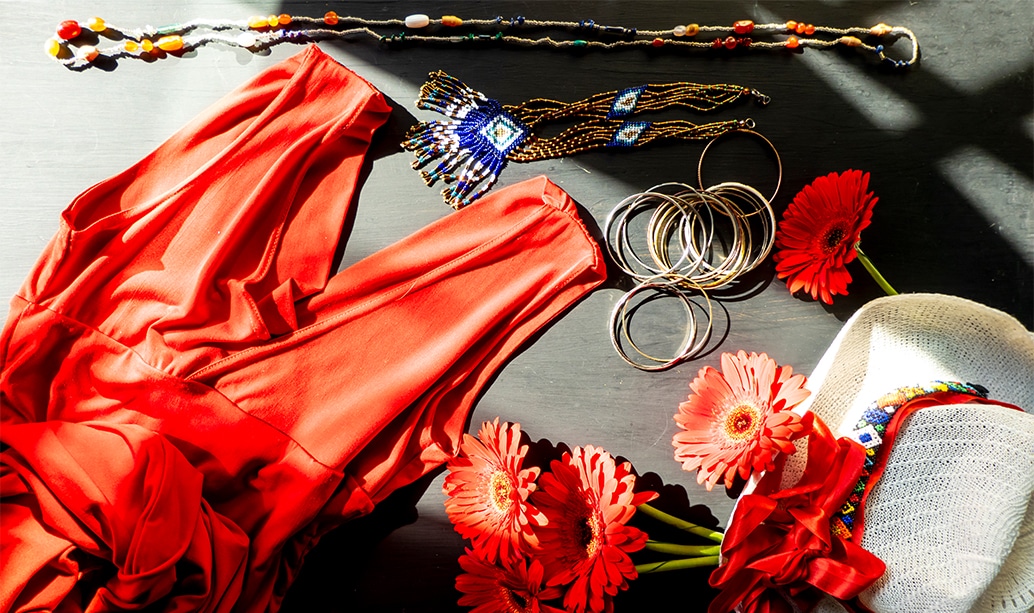
What it earns
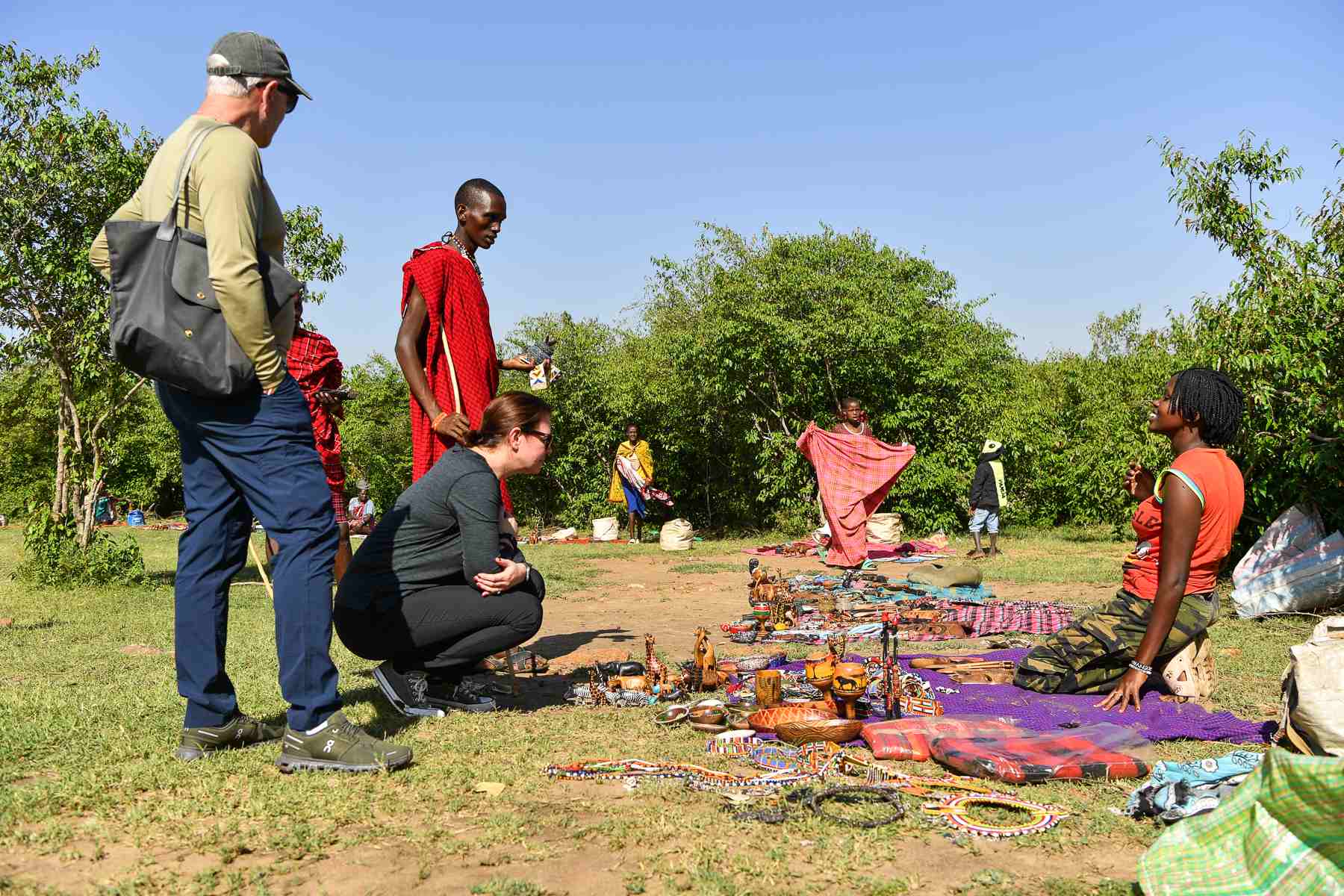
Beadwork is often the first independent income a Maasai woman has. Necklaces, collars, belts, sandals and bracelets sell at community markets and at camps and lodges across the Mara, and the money goes to the maker rather than into a household pooled around cattle.
That has consequences. School fees get paid. Clinic visits happen. Women who earn have standing in decisions that previously did not include them.
It only works if you buy from the woman who made the piece rather than a middleman, which is worth asking about before you hand anything over.
Where it has reached
Maasai beadwork now appears on international fashion runways and in contemporary African design, sometimes credited and sometimes not. The women making it are aware of both.
What has not changed is the reason for it. The pieces sold to visitors are made to the same patterns, with the same meanings, as the ones worn at a ceremony next week. The craft is not a performance for tourism. Tourism is simply where some of it now goes.